How AI reads Figma
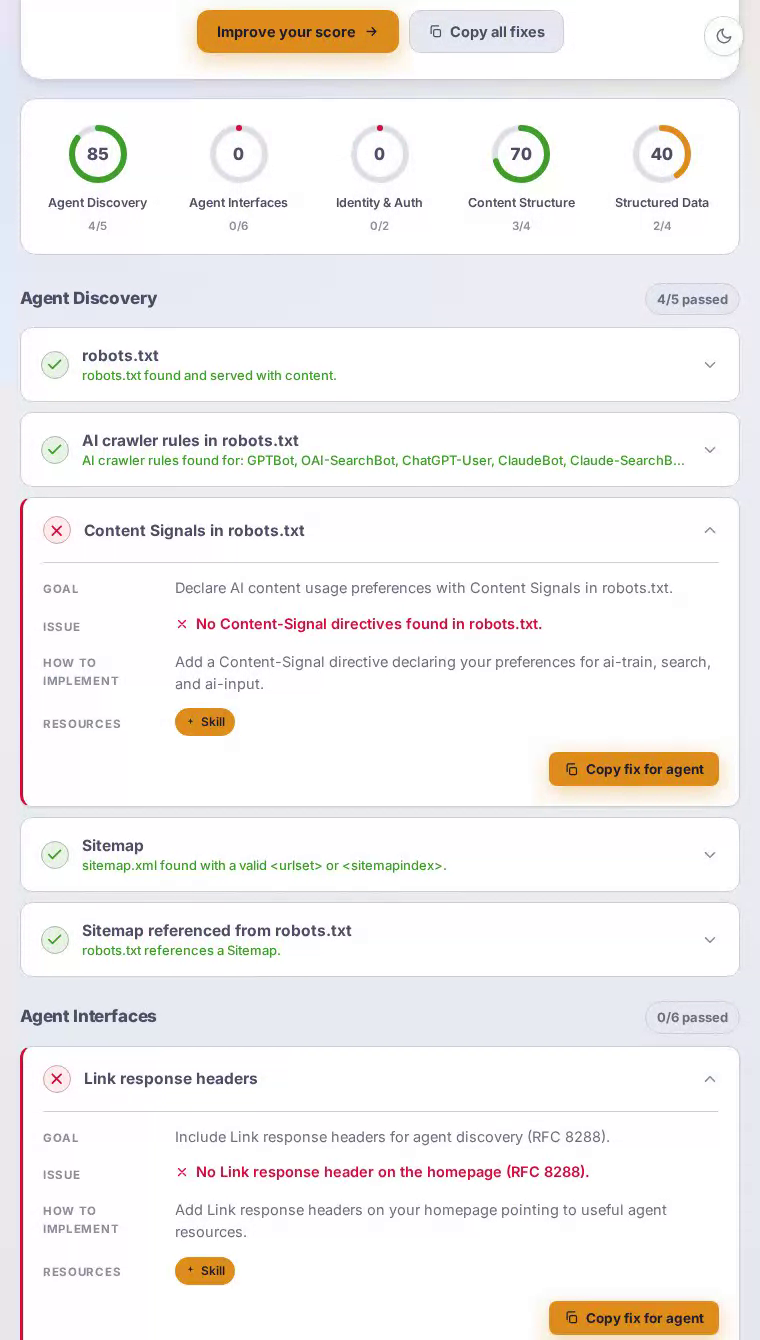
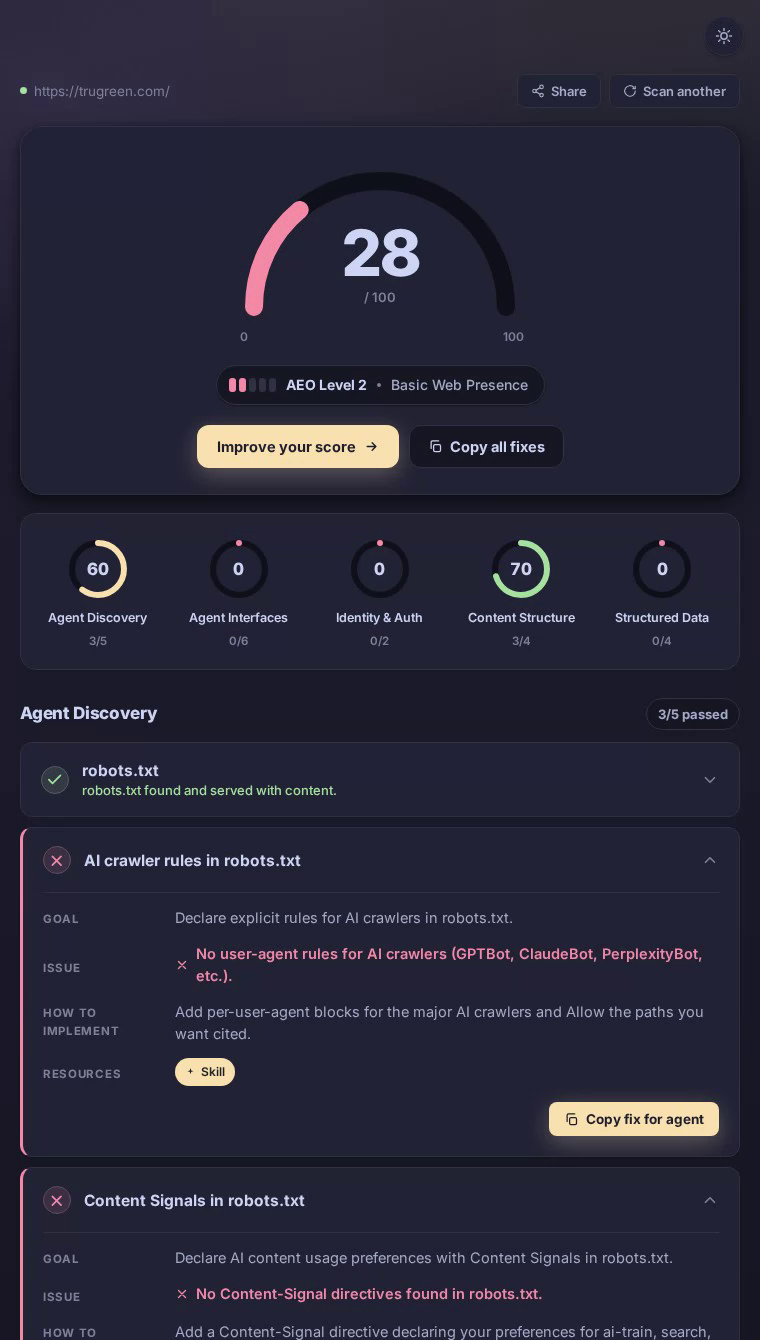
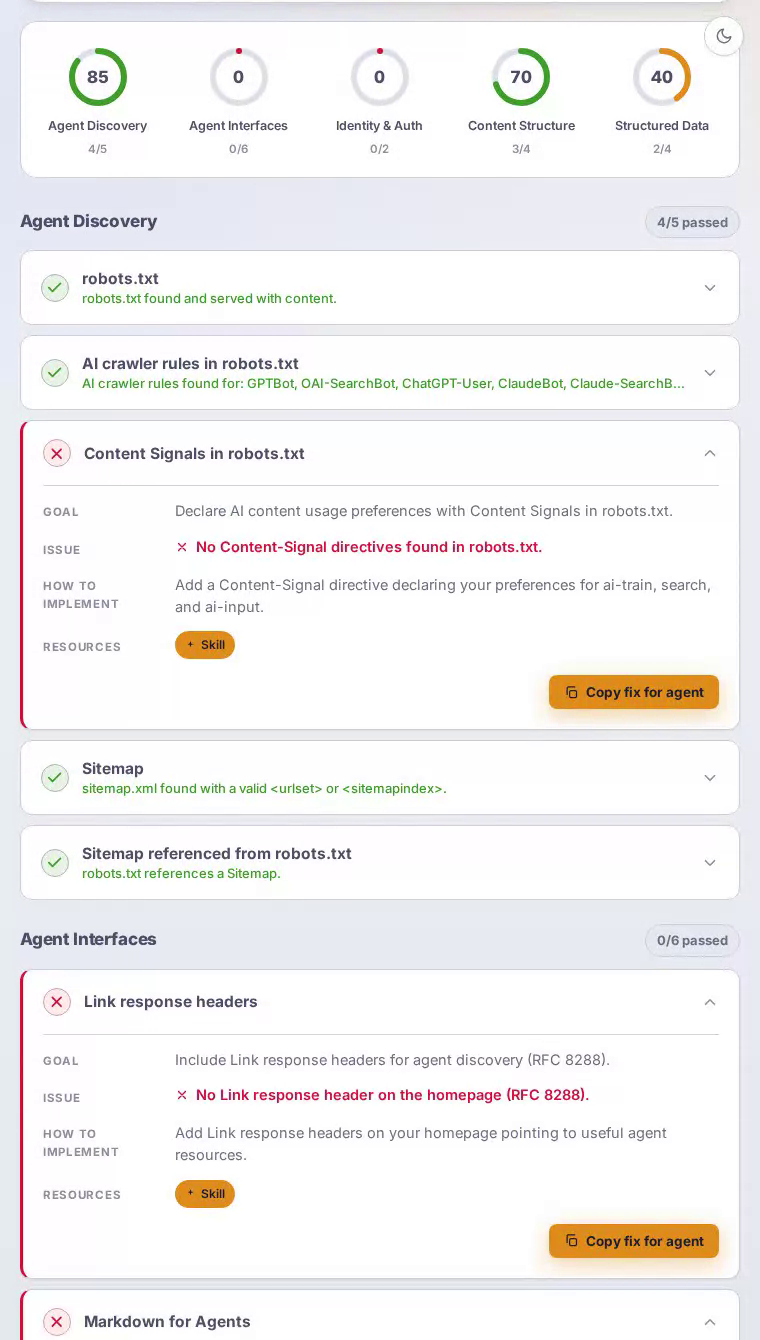
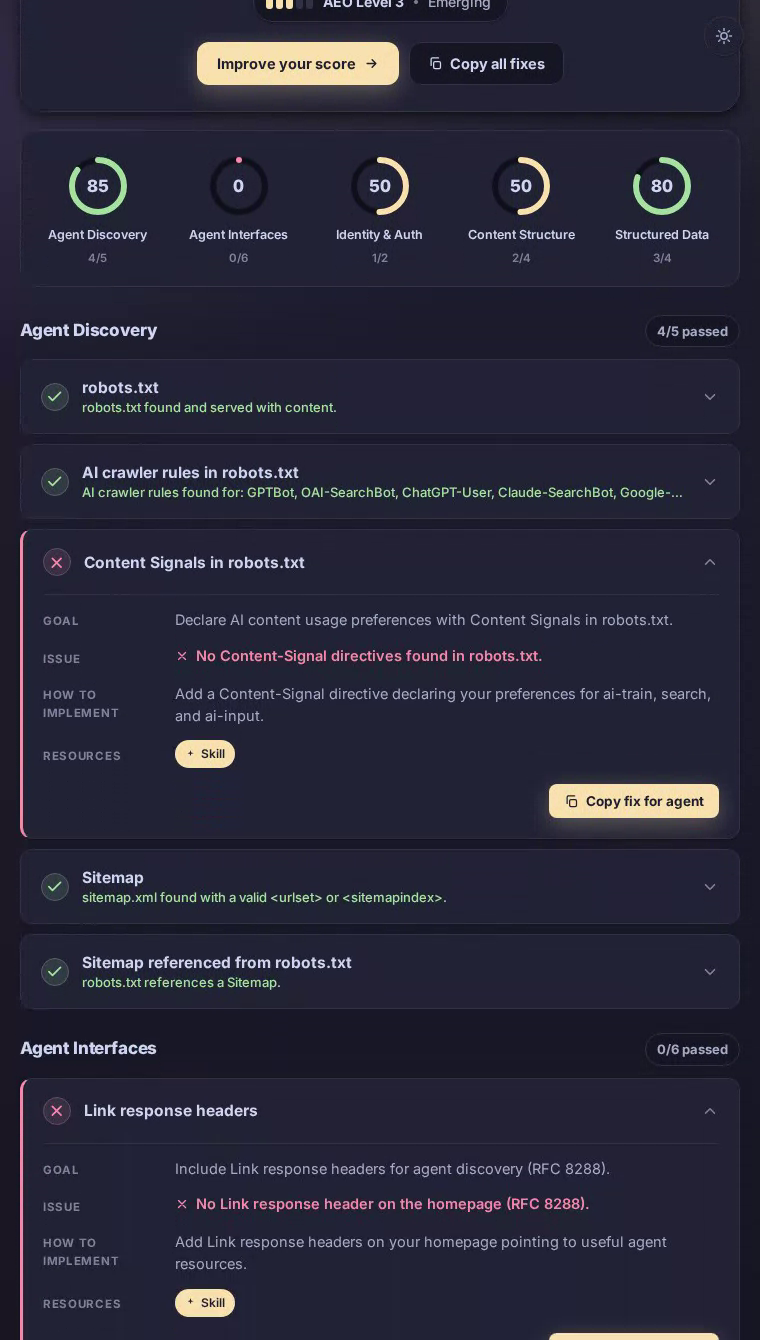
Figma scores 52 out of 100 on AEO readiness. The collaborative design platform excels at structured data (80) and agent discovery signals (85) but earns zero on agent interfaces — meaning no MCP server, no API catalog, and no Markdown responses for AI clients. Mid-tier overall.
What AI sees
When an AI agent crawls Figma today, it finds a design platform with solid metadata but almost no machine-readable interfaces to actually act on.
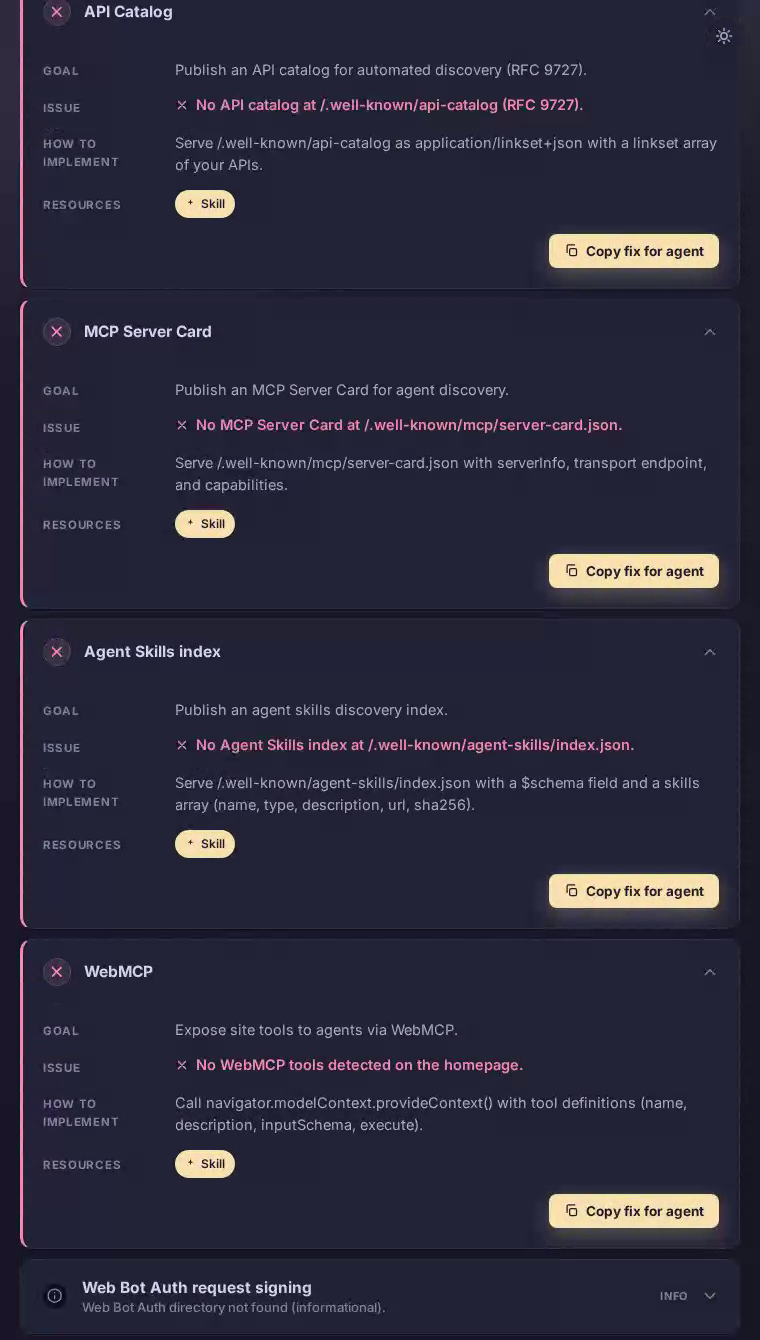
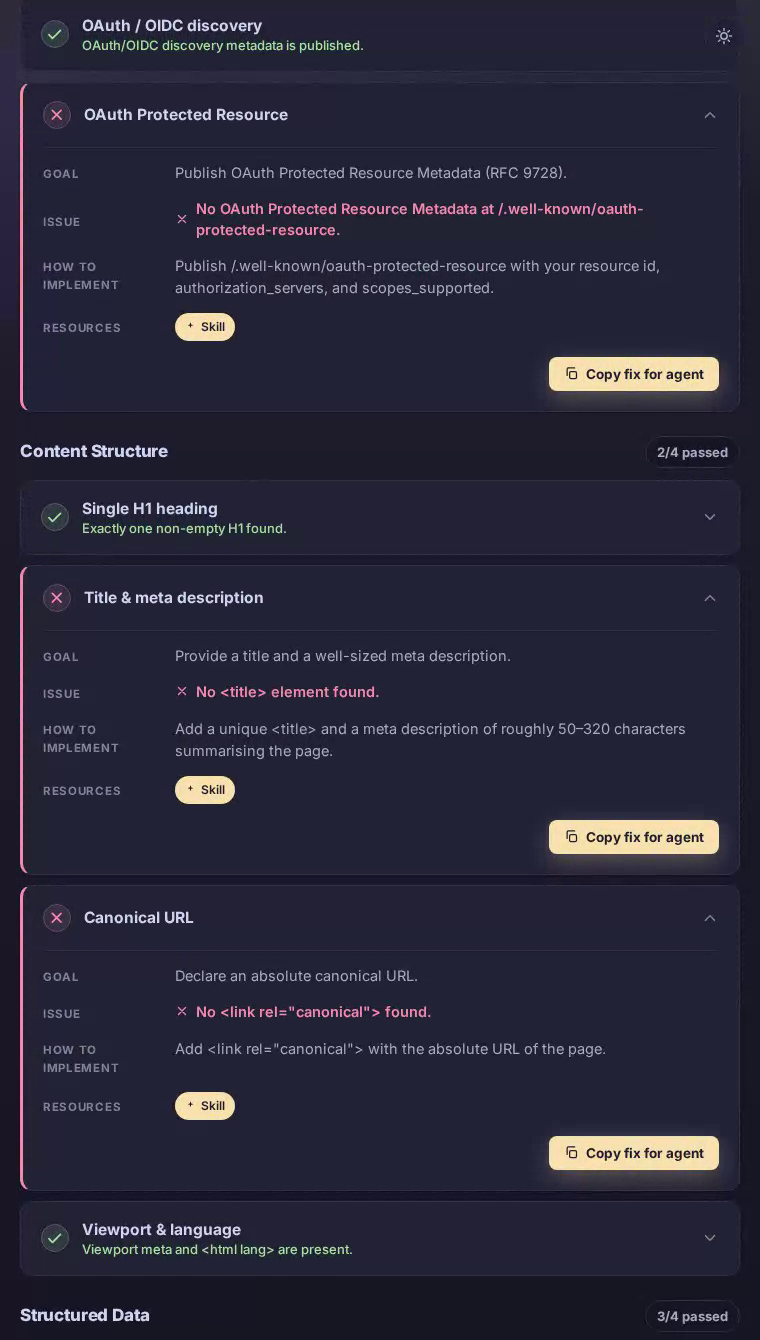
Agents querying Figma encounter a well-structured homepage with strong schema markup and good discovery signals — structured data scores 80 and basic agent crawlability reaches 85. But past that surface layer the picture changes sharply. There are no Link response headers to surface useful resources, no Markdown variant for Accept: text/markdown requests, and no /.well-known/ endpoints for API catalogs or MCP server cards. For an AI agent trying to understand what Figma offers programmatically — its REST API, plugin system, or webhook integrations — the site returns nothing machine-actionable. Identity and auth infrastructure is half-built at 50, and content structure matches that same midpoint.
Where it loses points
Agent interfaces score a flat zero — the sharpest gap in Figma's AEO profile and the primary reason its overall score stalls at 52.
How to fix it
Three targeted additions would push Figma's agent readiness substantially closer to a production-grade AI-first presence.
Publish an MCP Server Card
Expose Figma's capabilities to AI agents via a standardized MCP Server Card at /.well-known/mcp/server-card.json.
The scan found no server card at /.well-known/mcp/server-card.json, leaving every MCP-compatible agent unable to discover Figma's transport endpoint or capabilities.
Serve a JSON document at /.well-known/mcp/server-card.json declaring serverInfo (name, version), the transport endpoint (HTTP or SSE), and a capabilities object listing available tools such as file read, comment, or export. This single file unlocks Figma for Claude, Cursor, and any MCP-aware client.
Serve an API Catalog at /.well-known/api-catalog
Let automated agents discover Figma's REST API, Webhooks, and Plugin API through a standard RFC 9727 linkset.
No API catalog exists at /.well-known/api-catalog, so agents must guess at Figma's machine interfaces rather than locating them through a standard well-known path.
Return application/linkset+json from /.well-known/api-catalog with a linkset array pointing to Figma's REST API, Webhooks, and Plugin API OpenAPI specs. Add anchor and rel fields so agents can distinguish each surface without parsing documentation prose.
Return Markdown on Accept: text/markdown
Serve a clean Markdown version of key pages when AI agents request it, improving content extraction accuracy.
Figma's server ignores Accept: text/markdown headers and always returns HTML, forcing agents to strip navigation, footers, and UI chrome to extract meaningful content.
Detect the Accept: text/markdown header server-side and respond with a stripped, semantic Markdown document — headline, description, key feature list, and API entry points — using Content-Type: text/markdown. HTML remains the default for browsers; the Markdown path is agent-only.
Common questions
Why does Figma score high on agent discovery but zero on agent interfaces?
Does Figma's existing REST API help its AEO score?
How much would fixing these three issues improve Figma's AEO score?
Is your own site ready for AI?
Run the same five-category analysis on any URL. Free, no account needed to start.
Check your own website free