How AI reads Mr. Handyman
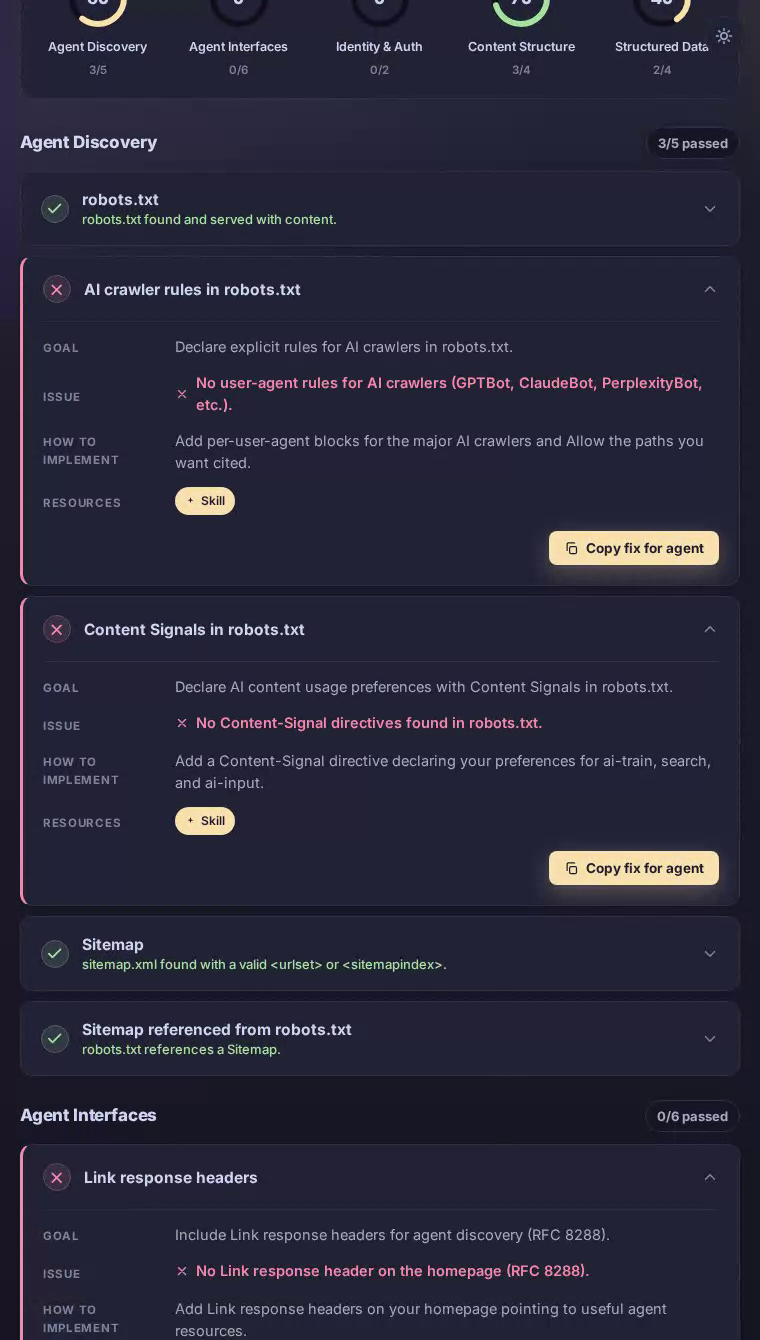
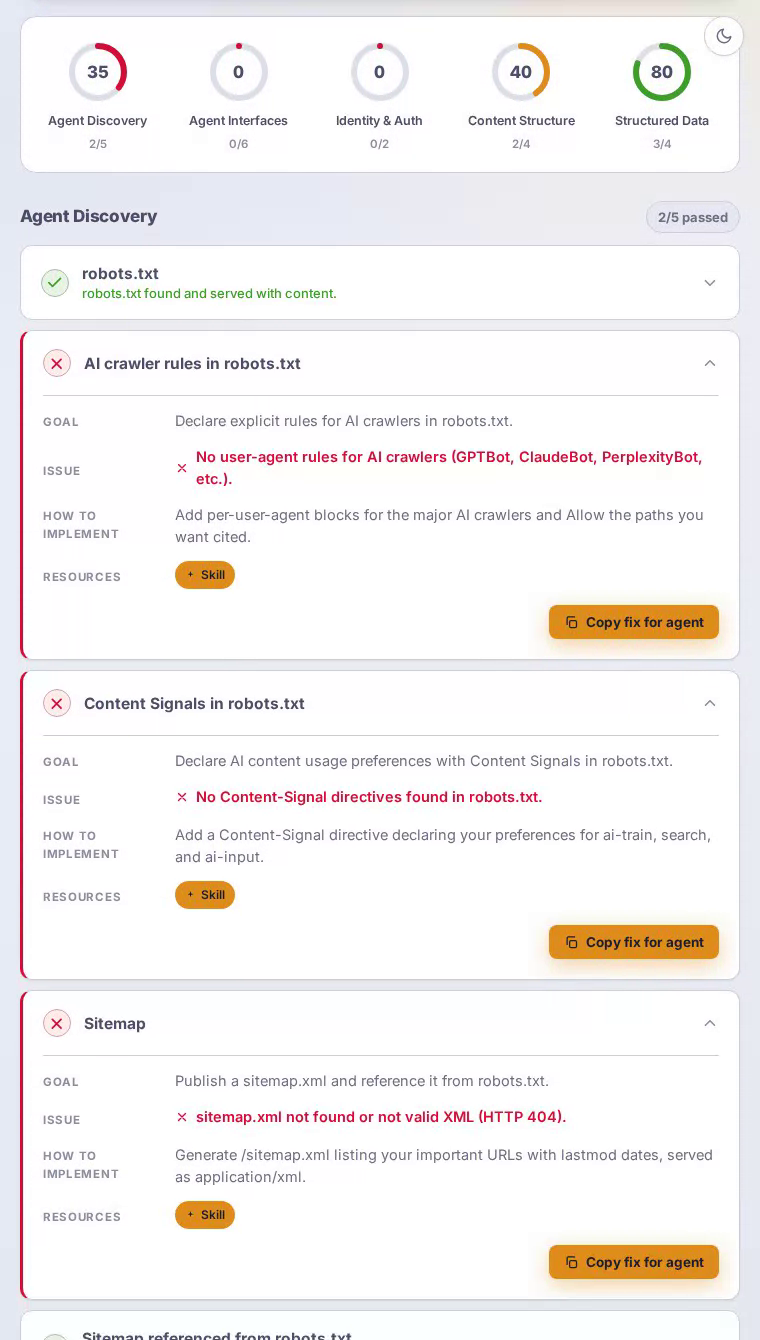
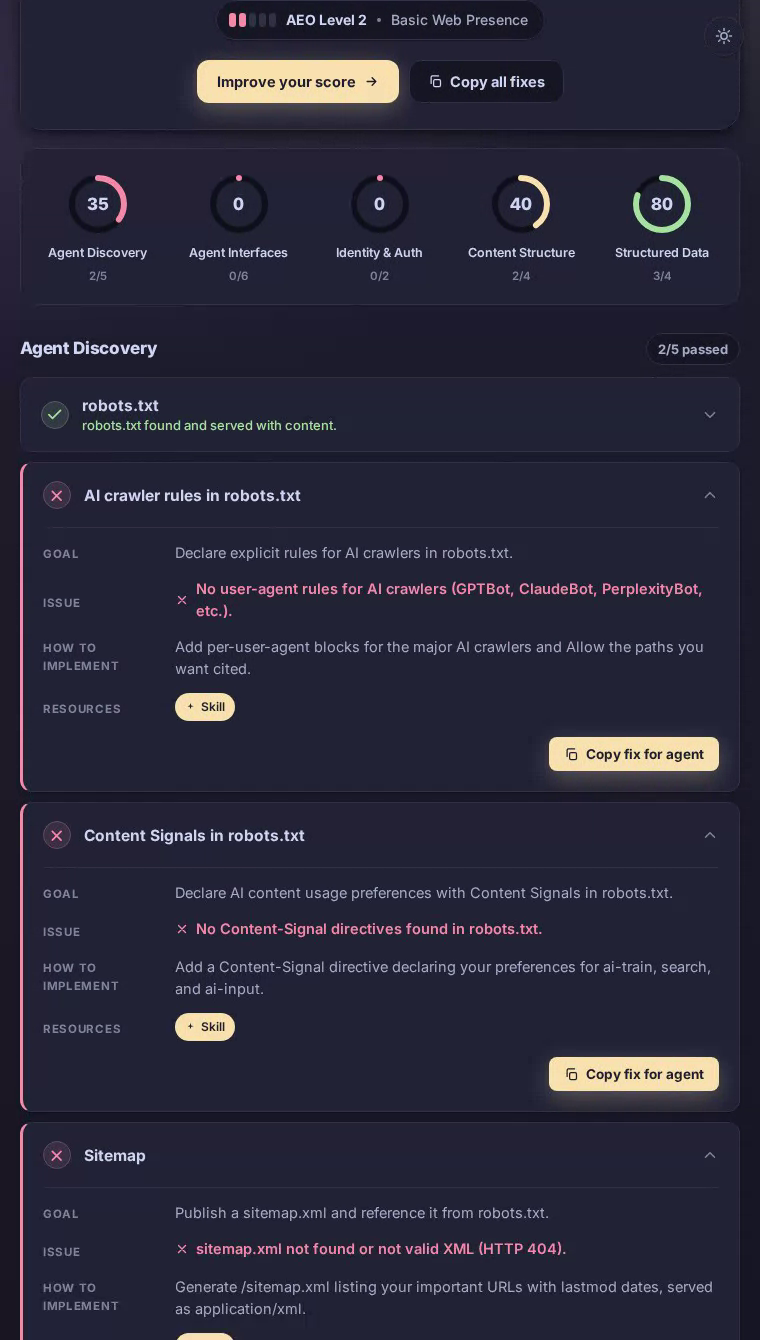
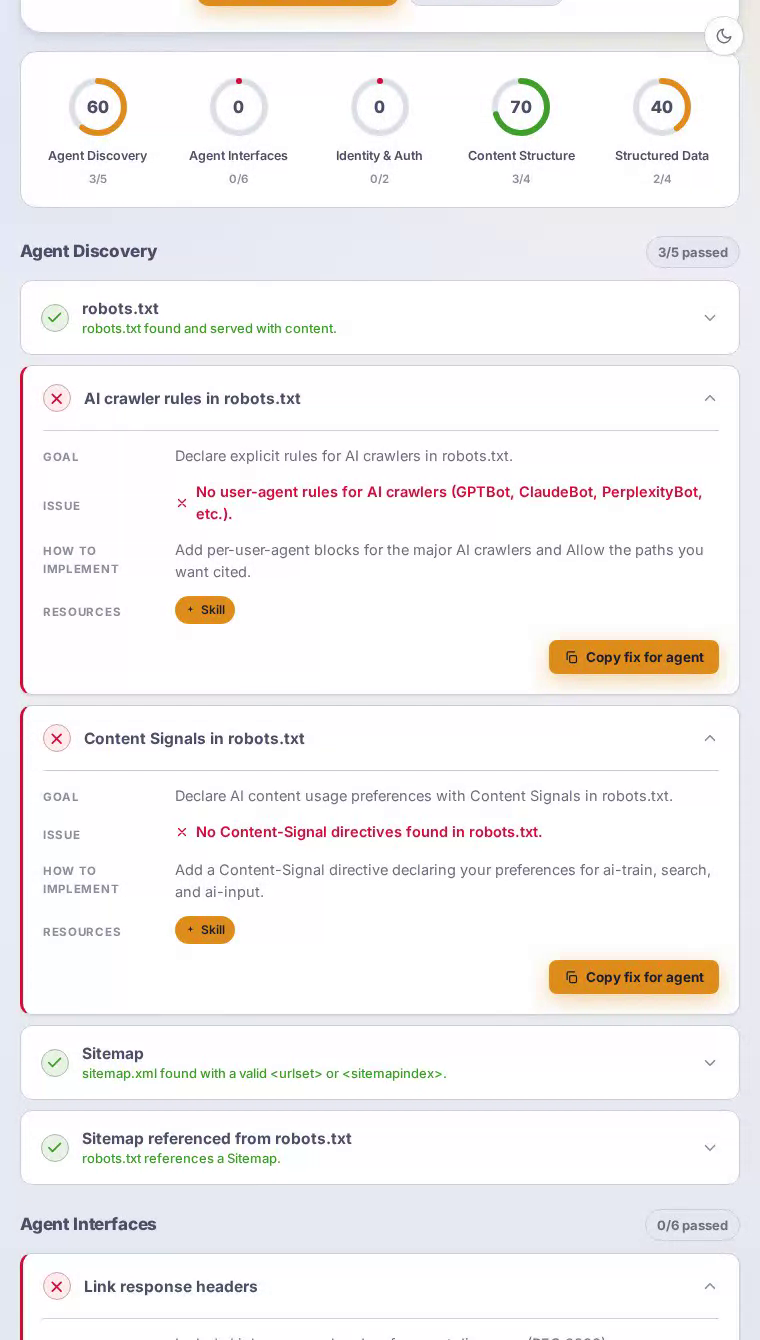
Mr. Handyman scores 37 out of 100 on our AEO scan, placing it at level 2. The site's content structure is solid at 70, but agent interfaces and identity authentication both register zero — meaning AI assistants can read the text but cannot interact with or verify the business as a trusted service provider.
What AI sees
When an AI agent visits Mr. Handyman's homepage today, it encounters a well-organized home repair franchise with readable content but no explicit guidance for automated discovery.
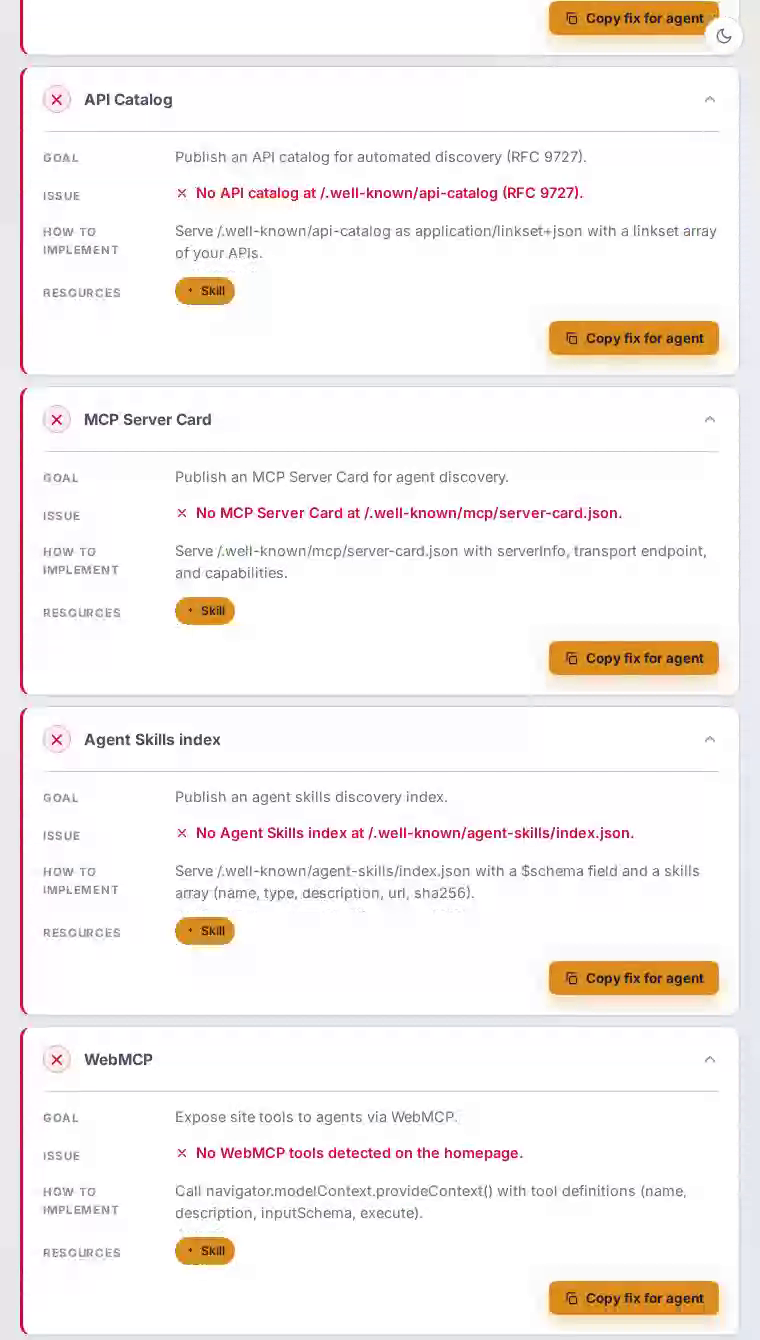
AI crawlers land on a homepage describing residential and commercial handyman services across franchise locations. The content structure score of 70 suggests headings, service categories, and location information are reasonably parseable for a home services brand. However, no robots.txt directives address AI crawlers specifically — GPTBot, ClaudeBot, and PerplexityBot receive no explicit instructions whatsoever. There are no Link response headers pointing agents toward structured resources, no Markdown endpoint for content-only responses, and no machine-readable API catalog. Structured data is partial at 40, meaning some schema markup exists but agent discovery mechanisms are entirely absent, leaving automated systems to improvise rather than navigate with confidence.
Where it loses points
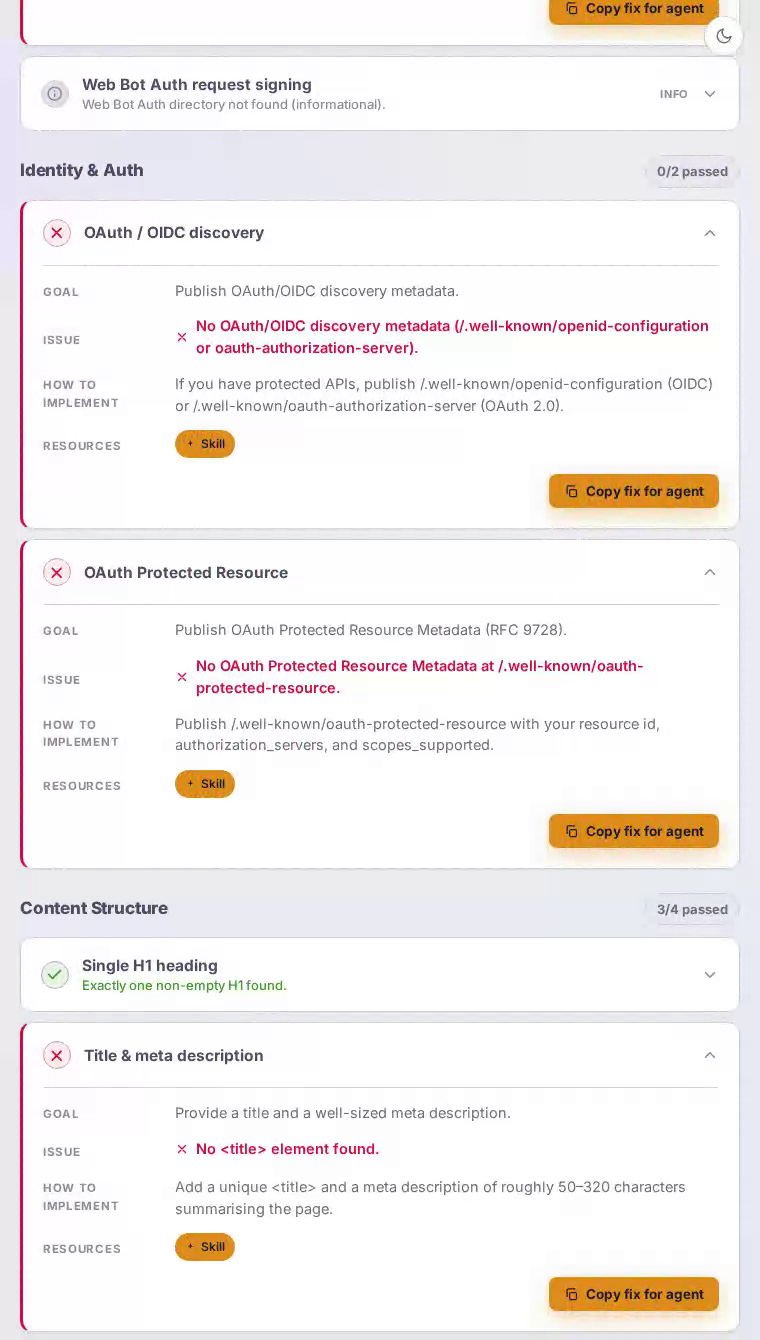
Agent interfaces and identity authentication both score zero — the most critical gaps preventing AI systems from treating Mr. Handyman as a trustworthy, interactable service provider.
How to fix it
Three targeted server-level changes would immediately improve how AI agents discover, parse, and recommend Mr. Handyman across answer engines and AI assistants.
AI Crawler Rules in robots.txt
Declare explicit per-agent rules so AI crawlers know exactly which paths they may index and cite.
The current robots.txt contains no user-agent blocks for GPTBot, ClaudeBot, PerplexityBot, or any other AI crawler.
Add individual user-agent sections for GPTBot, ClaudeBot, PerplexityBot, and similar bots with explicit Allow directives covering service pages, location pages, and FAQs. This signals crawl consent to AI systems and prevents accidental exclusion from AI-generated local service answers.
MCP Server Card
Publish a machine-readable server card so AI agents can automatically discover capabilities and endpoints.
No MCP Server Card exists at /.well-known/mcp/server-card.json.
Create /.well-known/mcp/server-card.json containing serverInfo with name, version, and description fields, a transport endpoint, and capabilities covering service lookup and location finder. This allows AI assistants to surface Mr. Handyman offerings as structured, actionable responses rather than generic text citations.
Markdown for Agents
Return clean Markdown content when AI agents request it via the Accept header.
The site returns HTML even when requests include Accept: text/markdown, forcing agents to parse full markup rather than clean prose.
Intercept requests carrying Accept: text/markdown and respond with Content-Type: text/markdown, stripping navigation, footers, and promotional elements — delivering service descriptions, pricing context, and location details as clean prose. This measurably improves citation quality and relevance in AI-generated home repair answers.
Common questions
Does Mr. Handyman appear in AI-generated answers from ChatGPT or Perplexity?
What does an AEO score of 37 mean for a home services franchise?
How quickly could Mr. Handyman improve its AEO score?
Is your own site ready for AI?
Run the same five-category analysis on any URL. Free, no account needed to start.
Check your own website free