How AI reads Western Dental
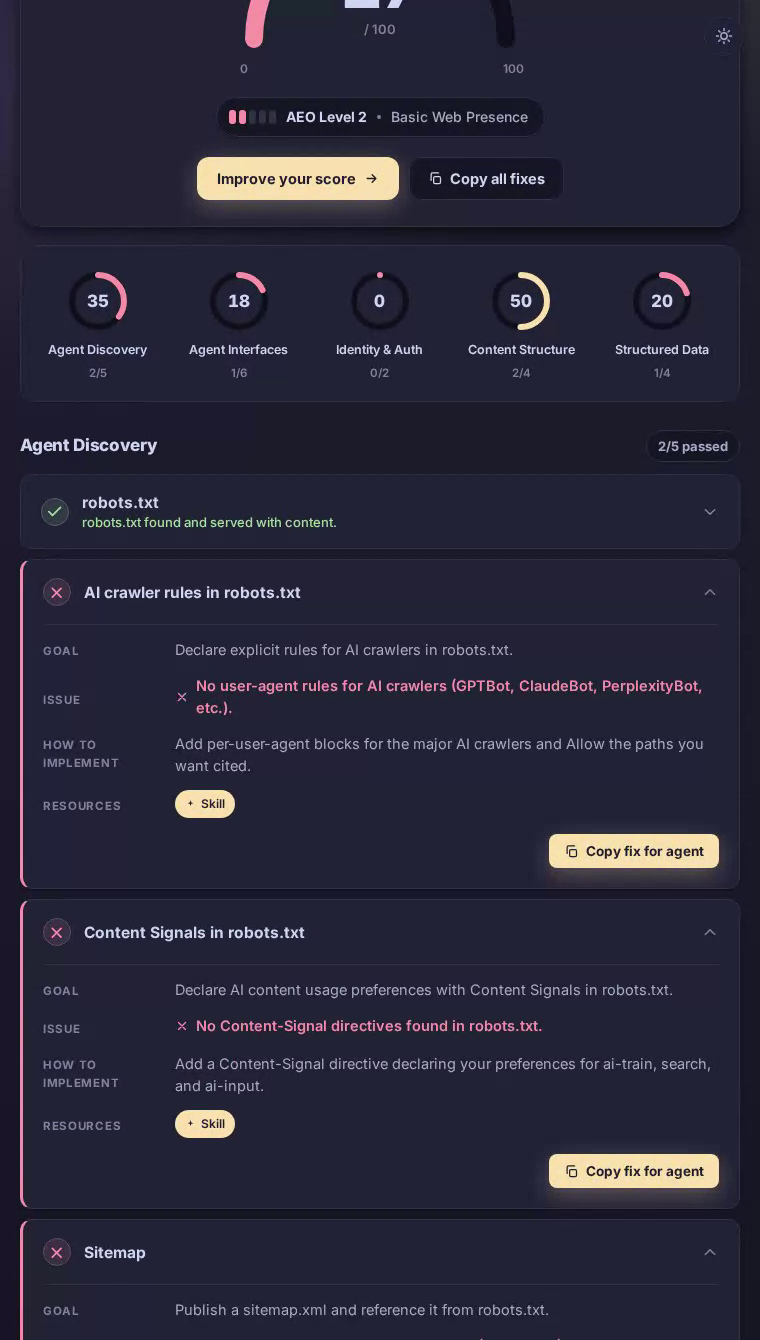
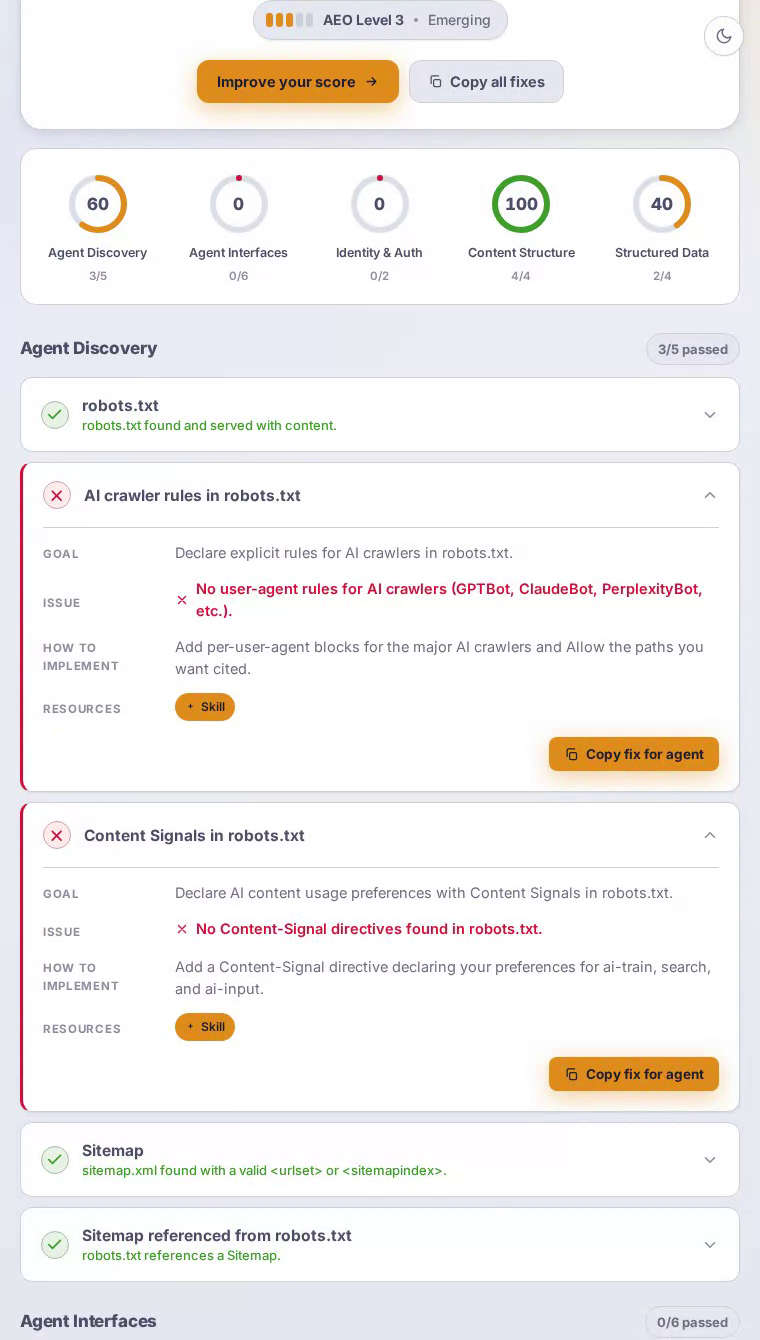
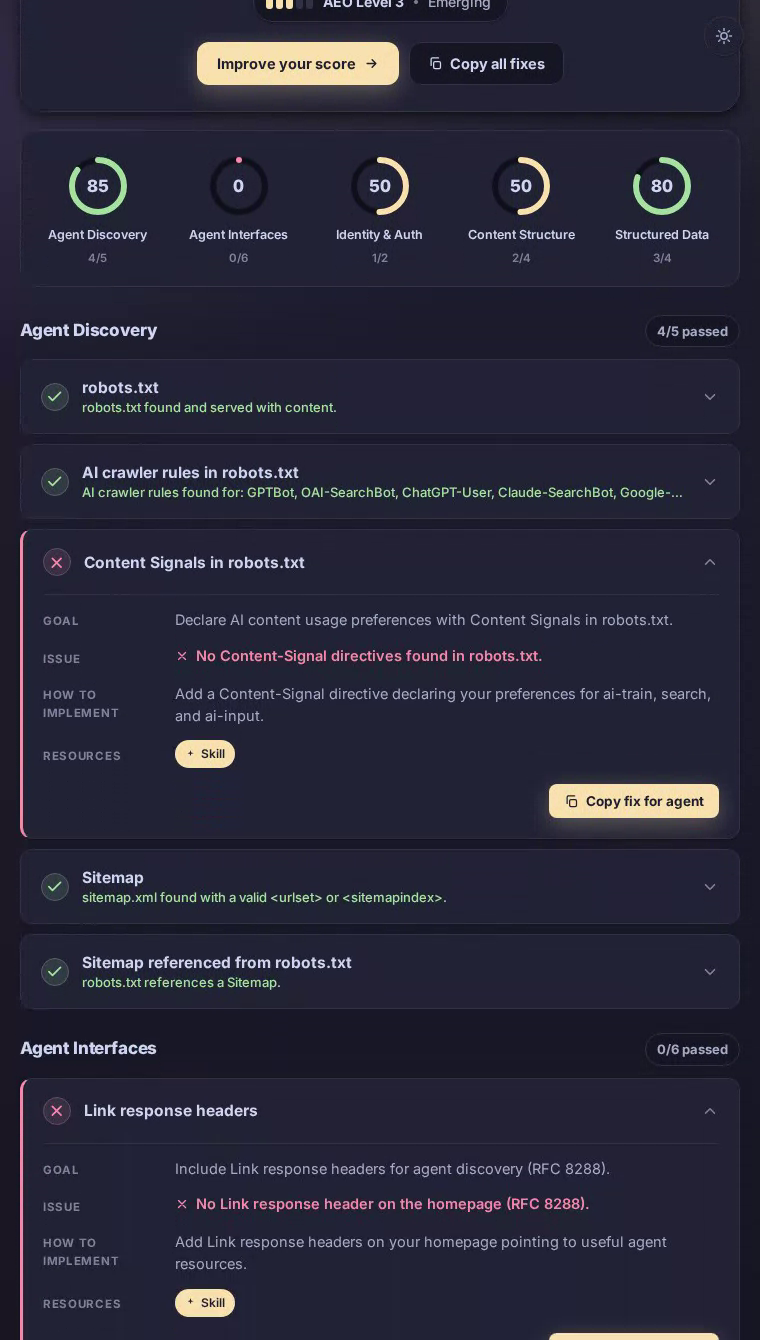
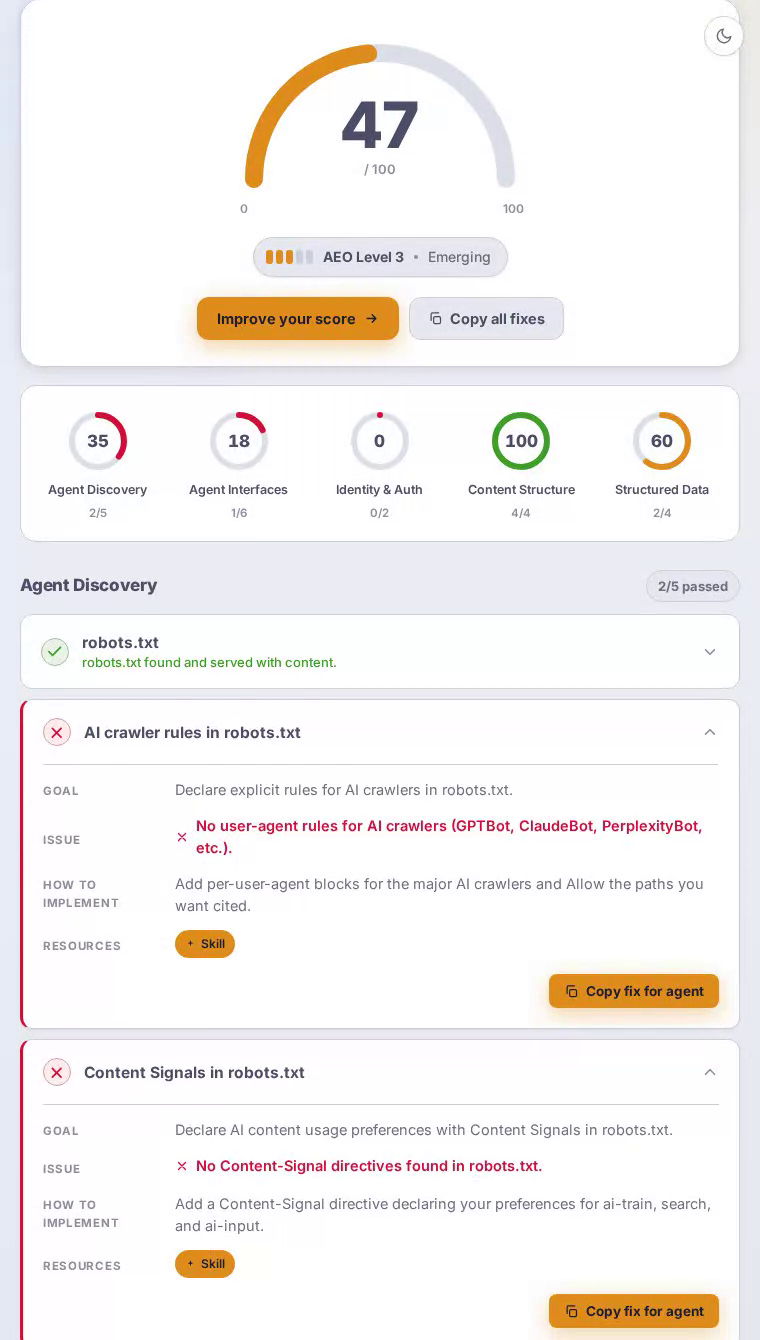
Western Dental earned a 47 out of 100 on our AEO scan — a mid-range result for a regional dental chain. The site's content structure is flawless, but missing AI crawler directives, a broken sitemap, and zero identity or authentication signals leave significant discoverability unrealized.
What AI sees
When an AI agent visits Western Dental's homepage today, it finds well-organized HTML but hits hard blockers before it can reliably index or cite the broader site.
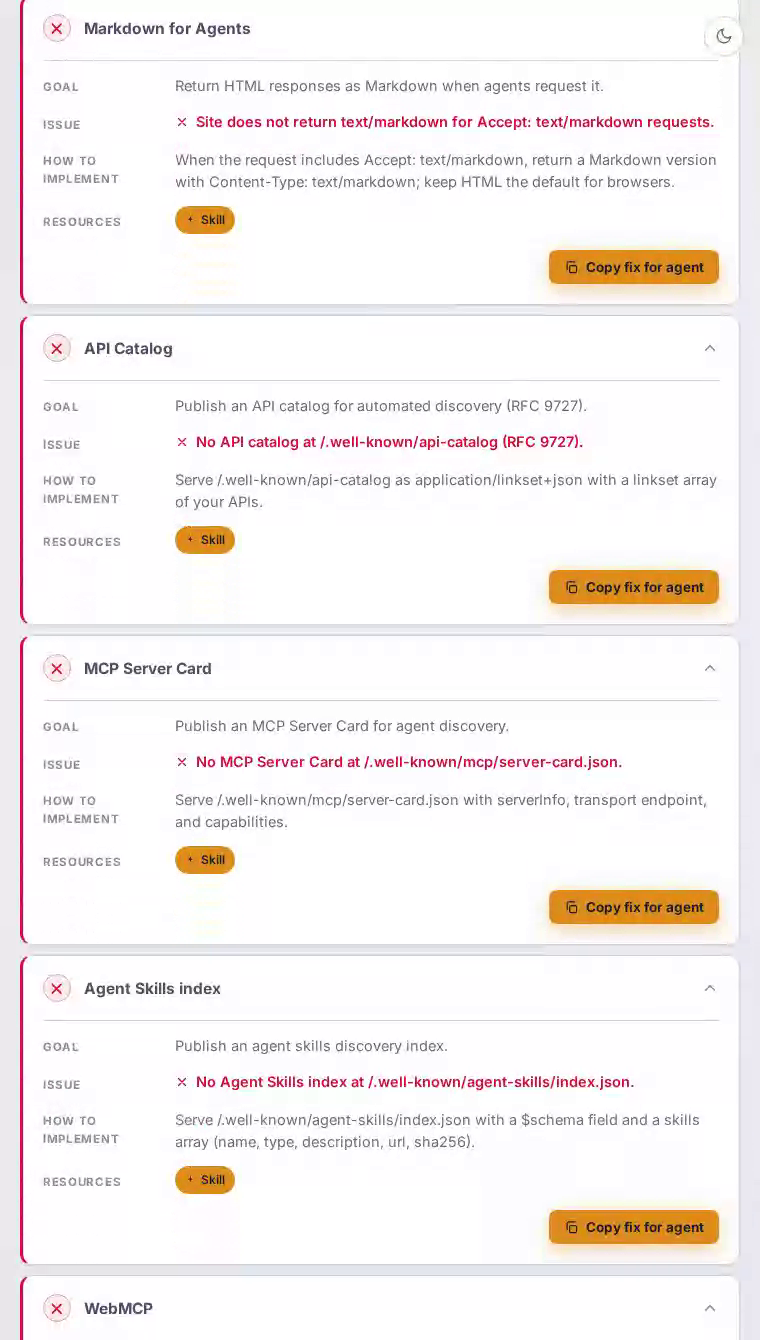
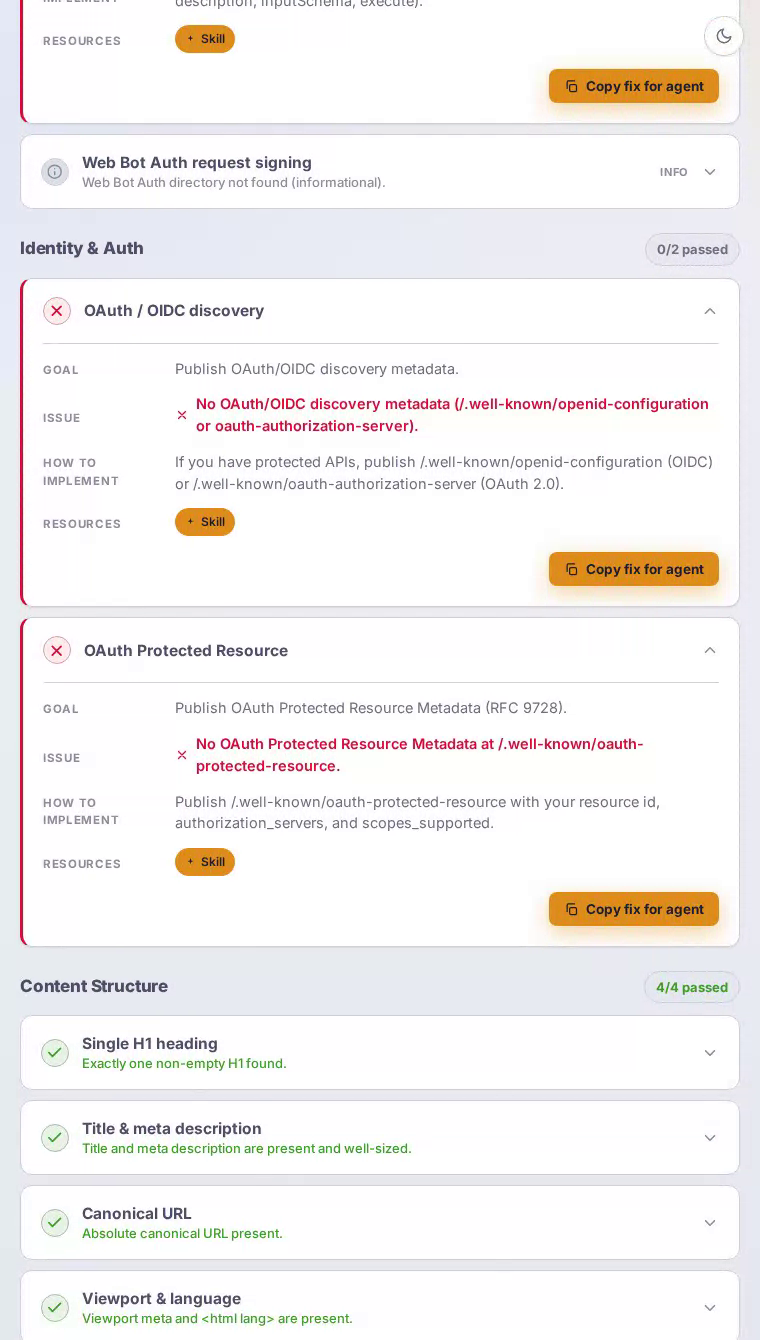
Western Dental operates a wide network of dental and orthodontic clinics serving cost-conscious patients across the western United States. The homepage delivers dense, structured HTML — our content structure check awarded a perfect 100 — meaning treatment descriptions, location data, and pricing cues are all parseable. Structured data reaches 60, confirming some schema markup is present. However, the AI agent cannot confirm the organization's identity or authority in any machine-readable way: the identity and authentication score sits at zero. Compounding the problem, no valid sitemap is served, leaving the agent without a reliable map of which clinic pages or service pages exist beyond what it stumbles onto from the homepage alone.
Where it loses points
The starkest single gap is identity and authentication, which scored zero — giving AI agents no verifiable signal about who operates the site or how much to trust its dental-care content.
How to fix it
Three targeted changes would move Western Dental from mid-tier to genuinely agent-ready without touching a line of clinical content.
Add AI crawler rules to robots.txt
Declare explicit per-agent rules so GPTBot, ClaudeBot, and PerplexityBot know exactly which clinic and service pages they may crawl and cite.
The scan found no user-agent blocks for any major AI crawler in the current robots.txt file.
Add individual user-agent stanzas for GPTBot, ClaudeBot, PerplexityBot, and Googlebot-Extended, then include Allow: directives for treatment pages, location pages, and patient FAQs you want surfaced in AI-generated answers.
Publish a valid sitemap.xml
Give every crawler a canonical, up-to-date index of Western Dental's service pages, clinic locations, and patient resources.
The sitemap endpoint returned HTTP 404 at time of scan, so AI agents have no structured map of the site beyond the homepage.
Generate /sitemap.xml listing treatment pages, clinic location pages, and patient FAQs with lastmod dates, serve it as application/xml, and add a Sitemap: reference line in robots.txt so crawlers discover it automatically.
Declare Content Signals in robots.txt
Establish a clear, machine-readable stance on whether Western Dental's content may be used for AI training, search indexing, or AI input.
No Content-Signal directives were found, leaving the site's consent posture completely undefined for AI systems reading the file.
Add a Content-Signal: block to robots.txt declaring your preferences for ai-train, search, and ai-input — even a permissive declaration builds the trust signal that frontier models use when deciding whether to cite a healthcare source.
Common questions
Why does a dental chain like Western Dental need AEO?
What does an identity and authentication score of zero mean in practice?
Is a perfect content structure score enough to perform well in AI answers?
Is your own site ready for AI?
Run the same five-category analysis on any URL. Free, no account needed to start.
Check your own website free