How AI reads Notion
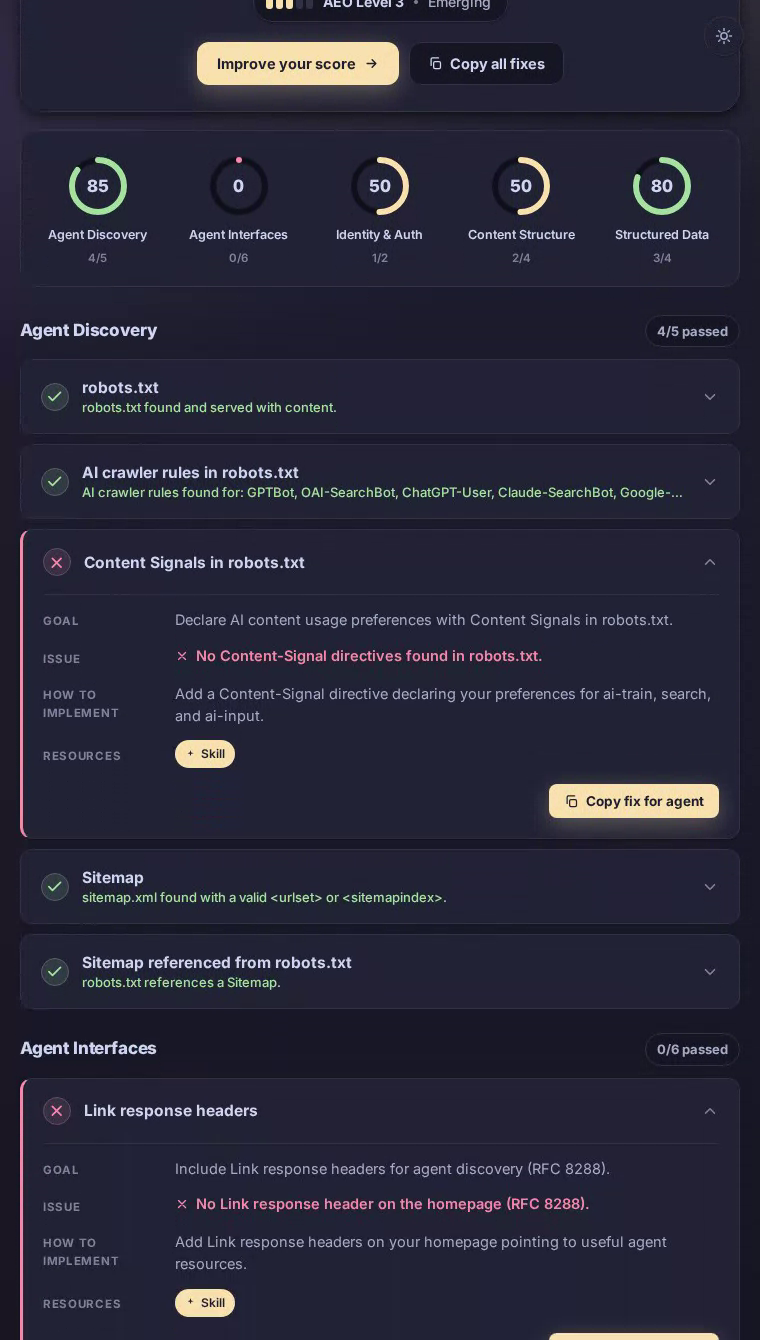
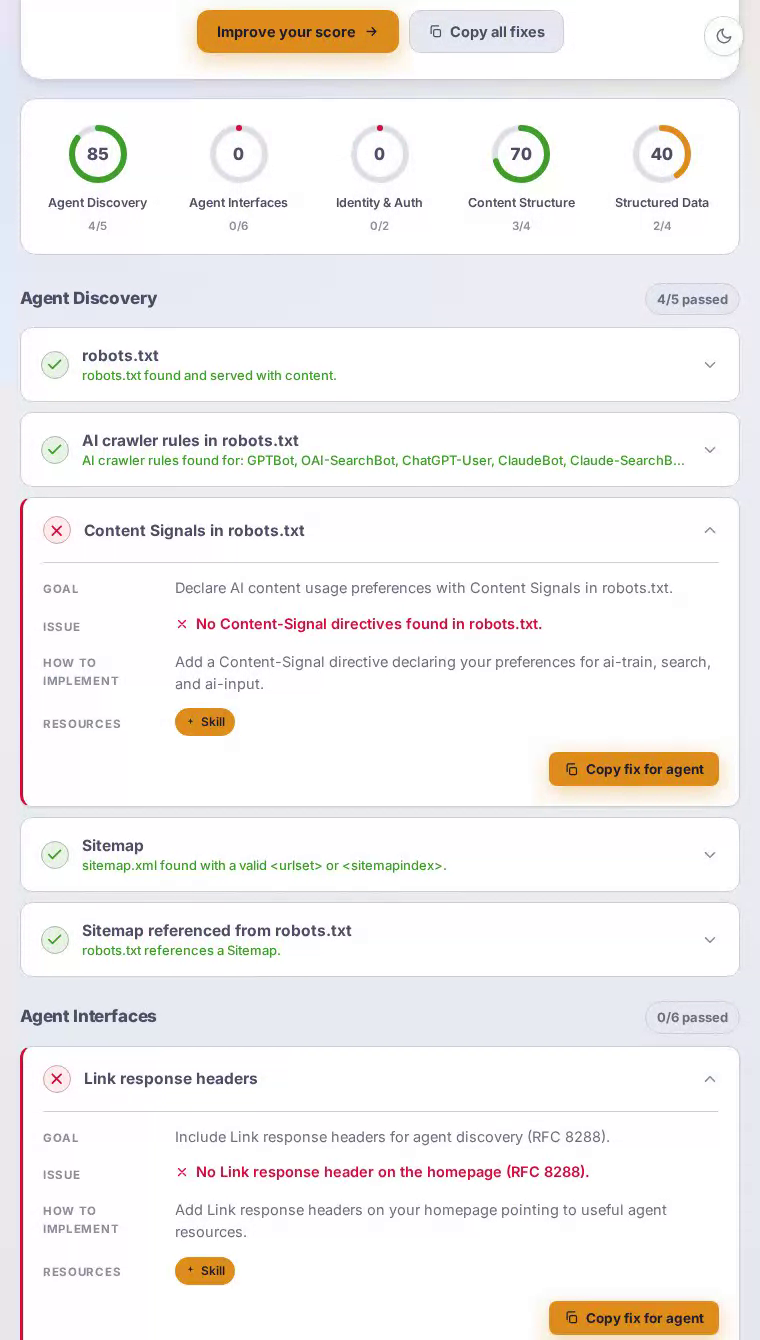
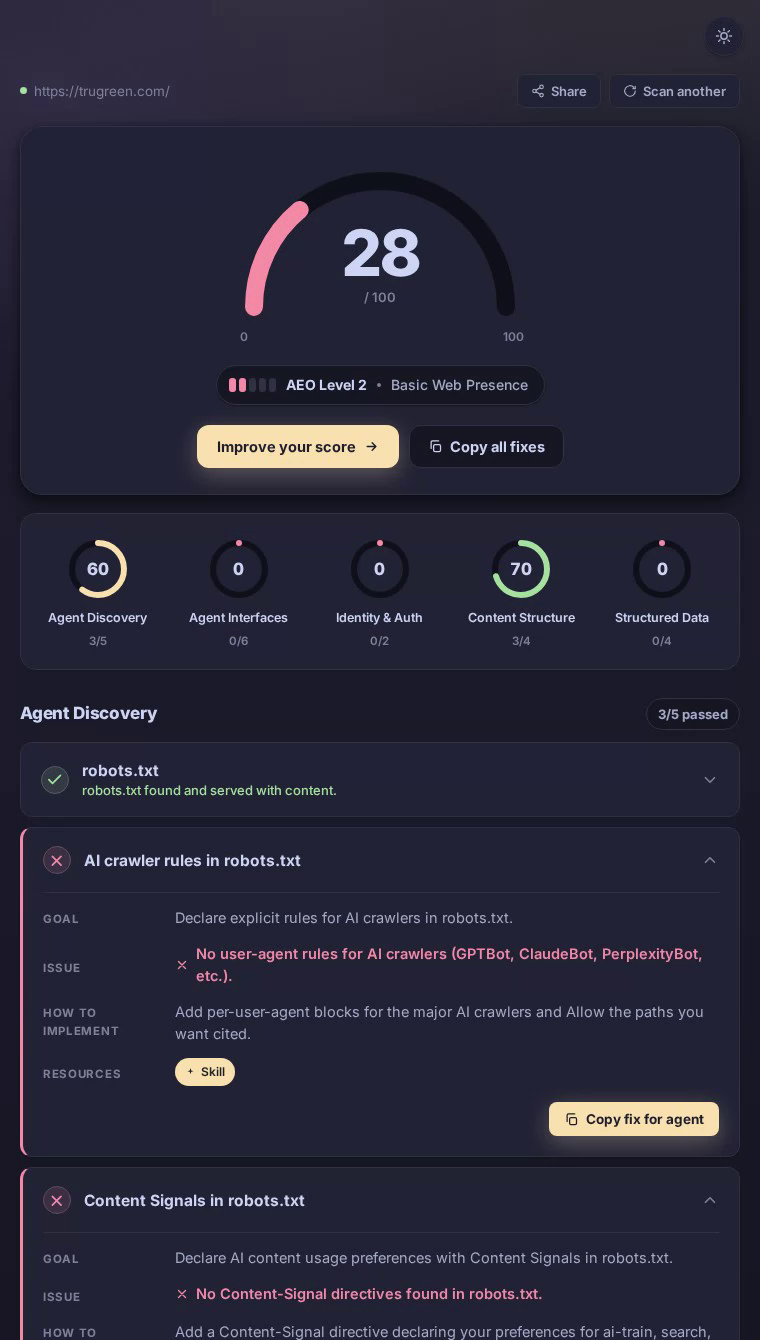
Notion scores 43 out of 100 on our AEO scan — a midpoint result shaped by perfect content structure but zero agent interface support. The platform's workspace and collaboration features are well-written, but AI agents visiting today find no MCP server card, no AI crawler rules in robots.txt, and no machine-readable discovery endpoints.
What AI sees
When an AI agent visits Notion's homepage today, it lands on content-rich terrain that scores perfectly for structure but immediately runs into a protocol dead end.
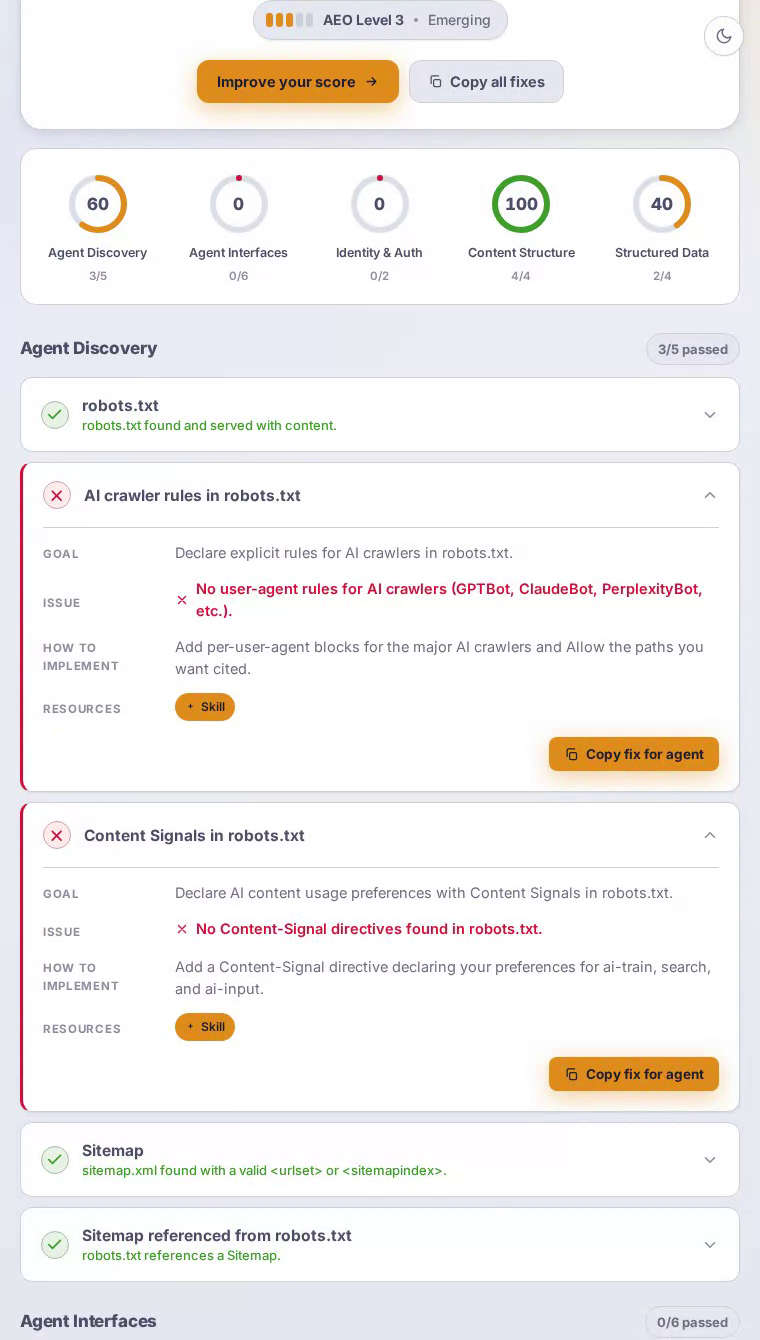
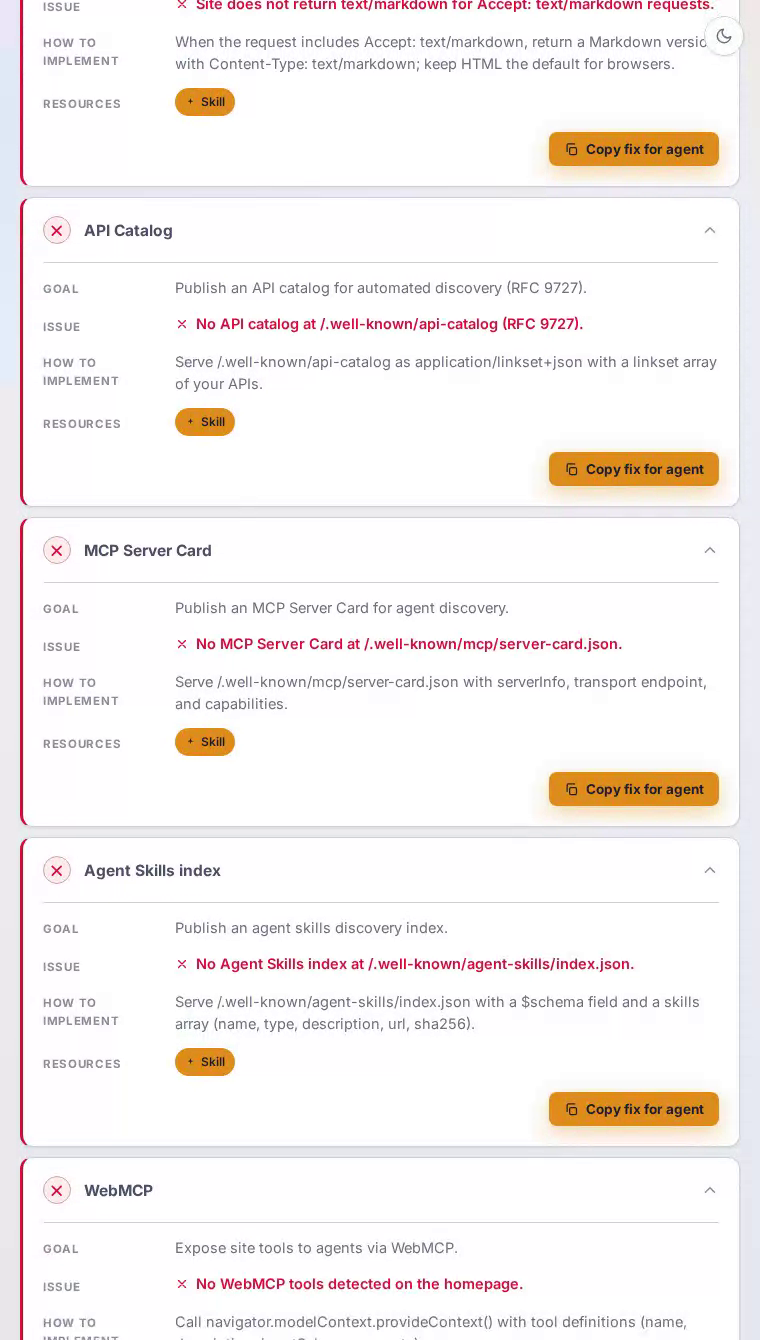
Notion's homepage serves clean, semantically rich HTML with well-defined headings covering workspace organization, team wikis, and project tracking — content an LLM can summarize with high fidelity, explaining the perfect content_structure score of 100. But the agent experience deteriorates quickly at the protocol boundary. The robots.txt includes no per-agent directives for GPTBot, ClaudeBot, or PerplexityBot, leaving crawlers to infer permissions. No Link response headers appear on the homepage to point autonomous clients toward APIs or structured resources. None of the standard agent discovery endpoints — API catalog, MCP server card, agent skills index — exist. For a product built entirely around structured information, that silence is a missed opportunity.
Where it loses points
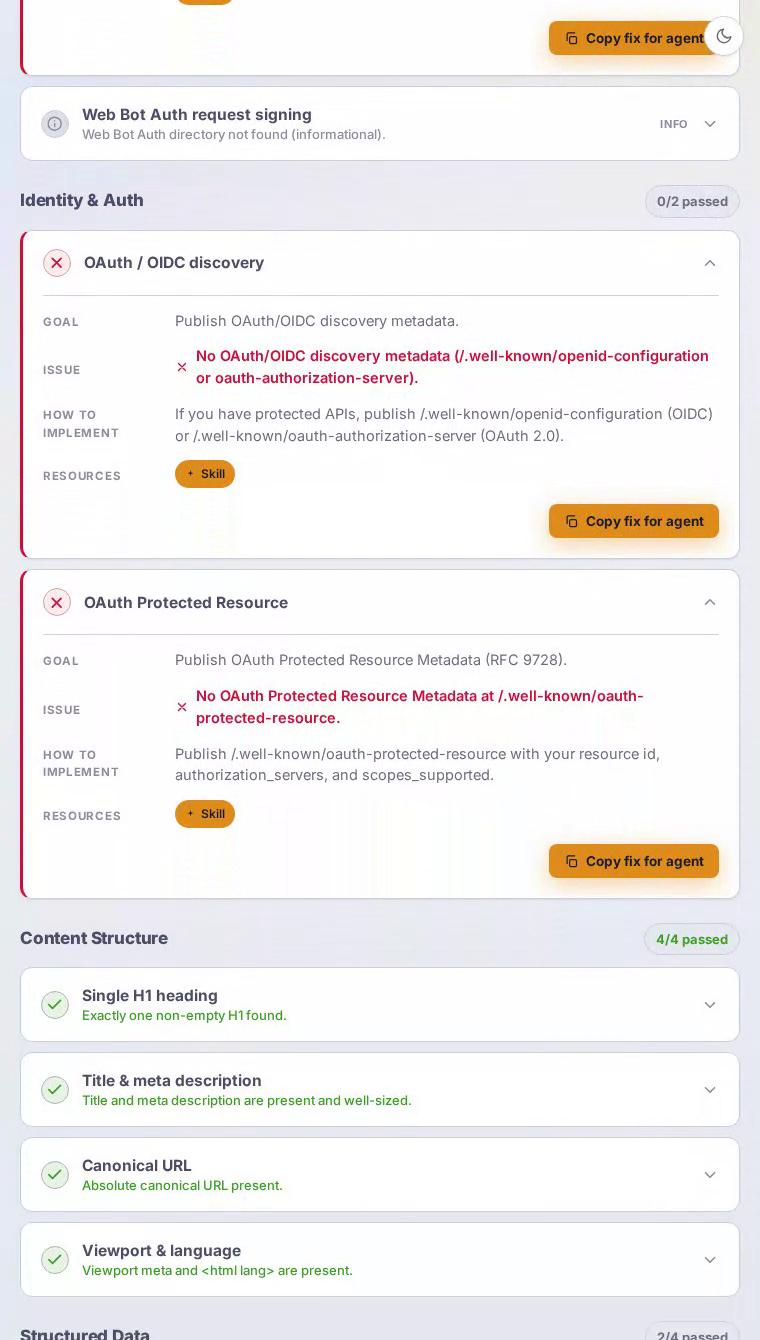
The sharpest drop comes from agent interfaces and identity authentication, both sitting at zero out of 100 — meaning Notion is invisible to agents that follow modern discovery protocols.
How to fix it
Three targeted changes would transform Notion from a passively-scraped web property into an active participant in the agentic web.
Declare AI crawler rules in robots.txt
Give AI crawlers explicit permission or restriction rules so they know which paths they may index and cite.
The robots.txt contains no user-agent blocks for GPTBot, ClaudeBot, PerplexityBot, or any other AI crawler.
Add dedicated User-agent blocks for each major AI crawler followed by Allow or Disallow directives. For public marketing and help content, Allow /; for private workspace paths you do not want cited, add matching Disallow lines.
Publish an MCP Server Card
Expose Notion's capabilities to AI agents that follow the Model Context Protocol discovery standard.
No MCP Server Card exists at the standard discovery path, leaving agent_interfaces at zero.
Serve a JSON document at /.well-known/mcp/server-card.json listing serverInfo, the transport endpoint, and available capabilities such as page read, database query, and block creation. This enables MCP-compatible agents to integrate directly without manual configuration.
Return Markdown for agent requests
Deliver page content as clean Markdown when an agent signals it prefers machine-readable prose over HTML.
The site returns HTML regardless of the Accept header, so agents requesting text/markdown receive a layout-heavy document instead of pure content.
Detect the Accept: text/markdown request header on public pages and return a Markdown rendering with Content-Type: text/markdown. Keep HTML as the default for browsers. This lets AI agents ingest Notion's help docs and marketing content without DOM parsing.
Common questions
What does Notion's AEO score of 43 out of 100 actually mean?
Can AI agents use Notion content today despite the low score?
Which fix would have the fastest impact on Notion's AEO score?
Is your own site ready for AI?
Run the same five-category analysis on any URL. Free, no account needed to start.
Check your own website free