How AI reads Figma
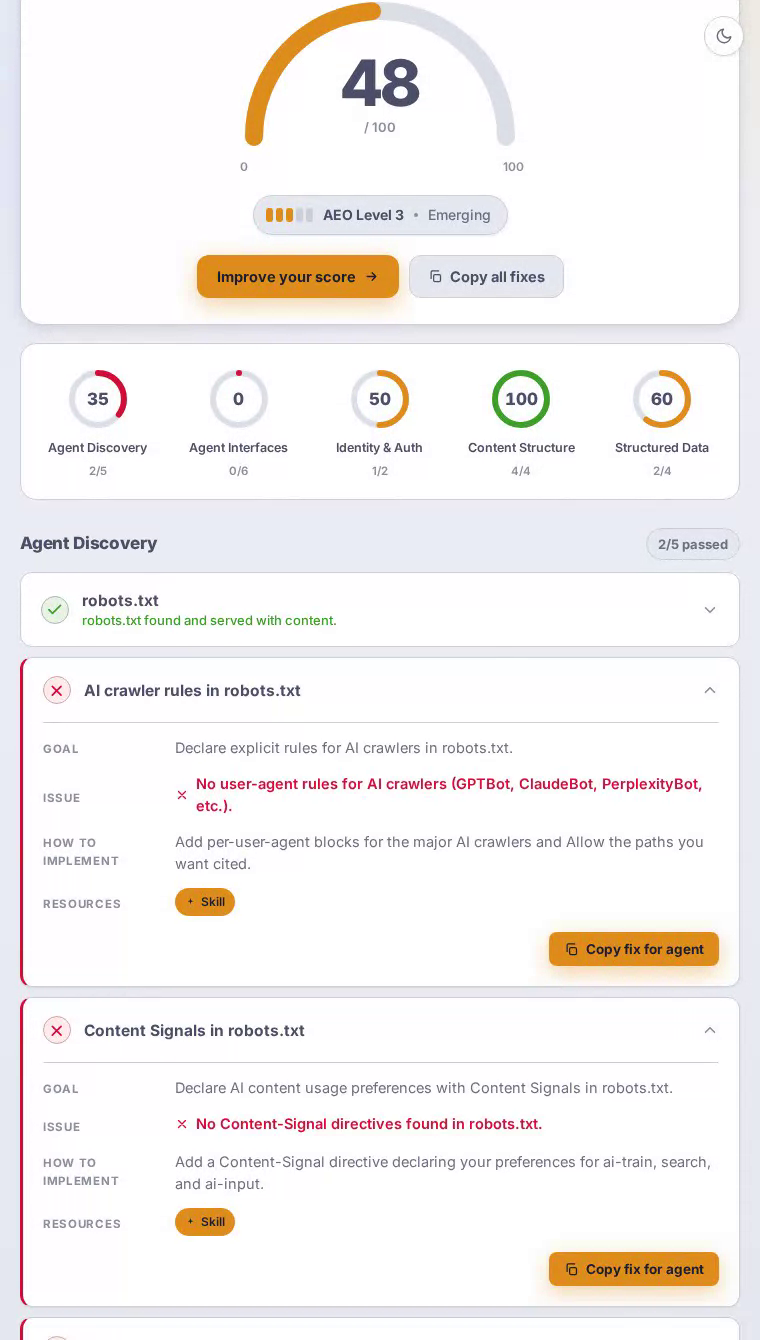
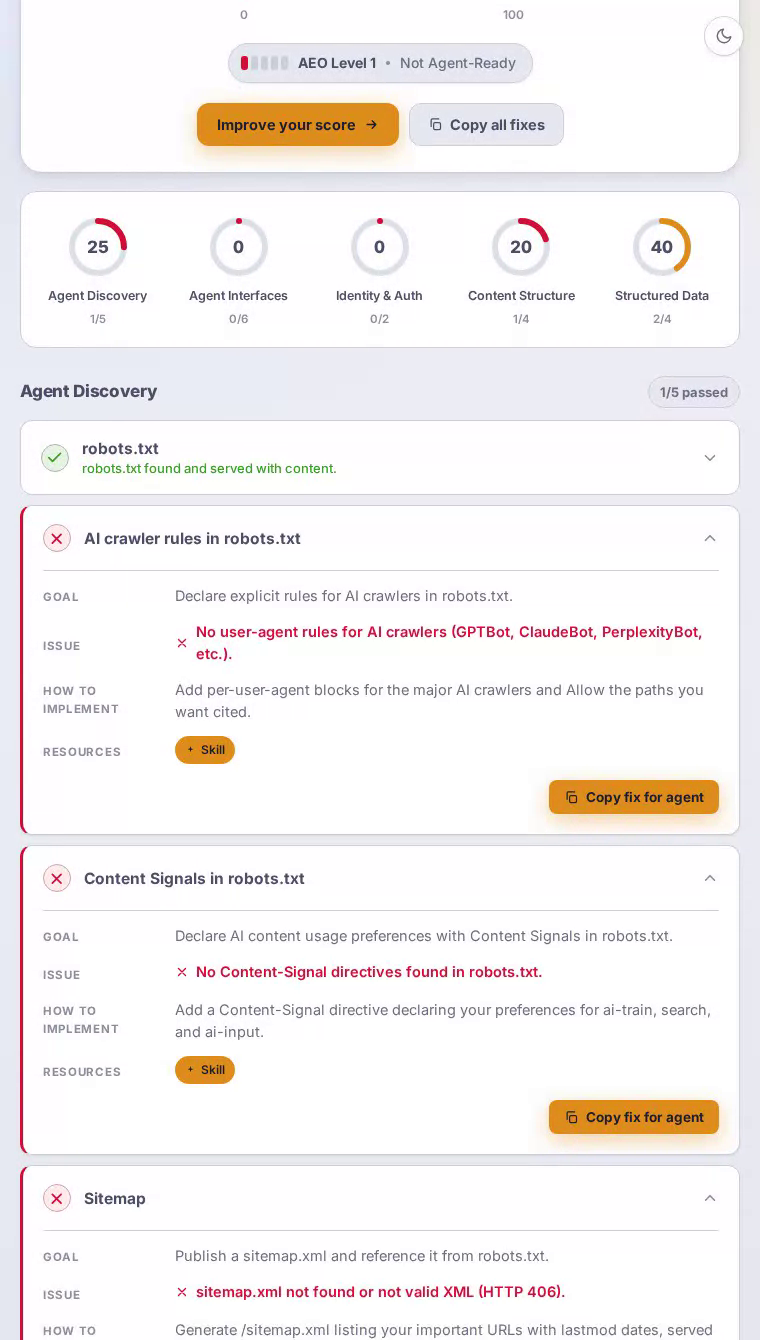
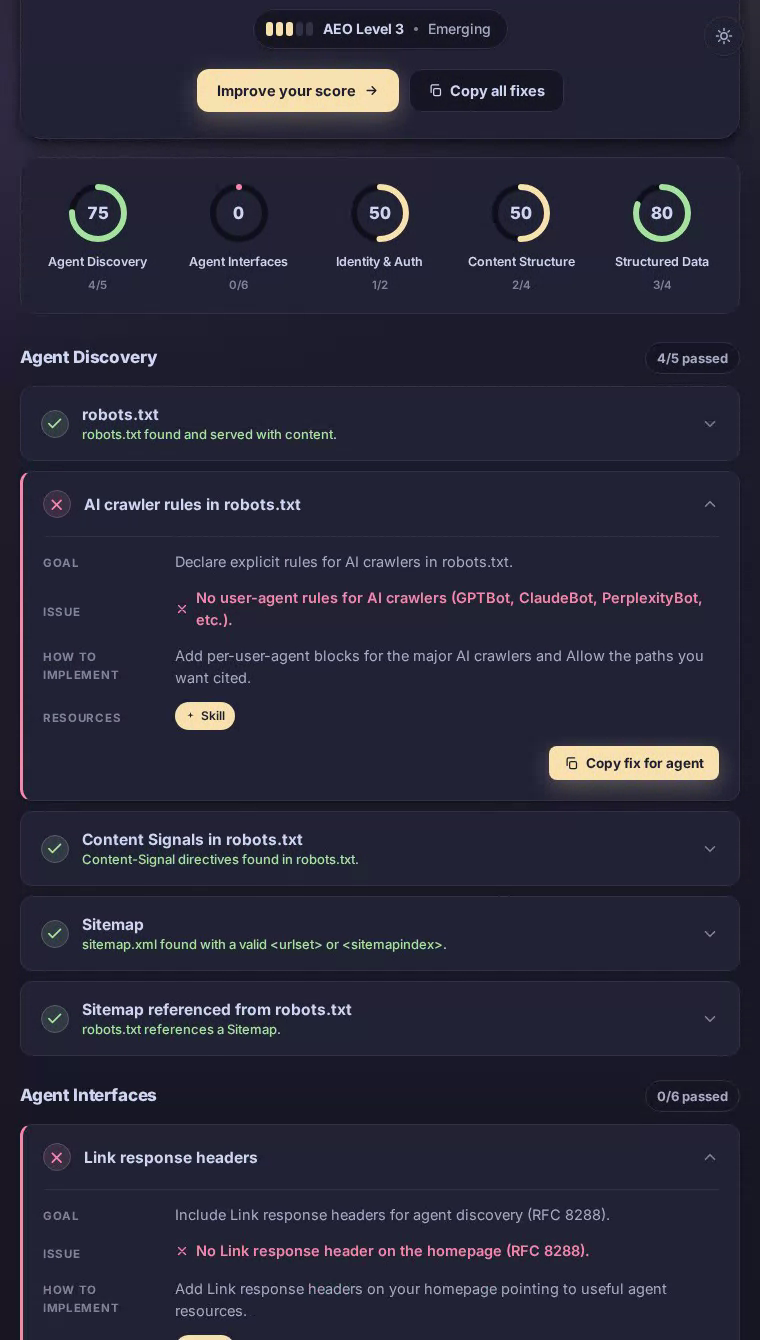
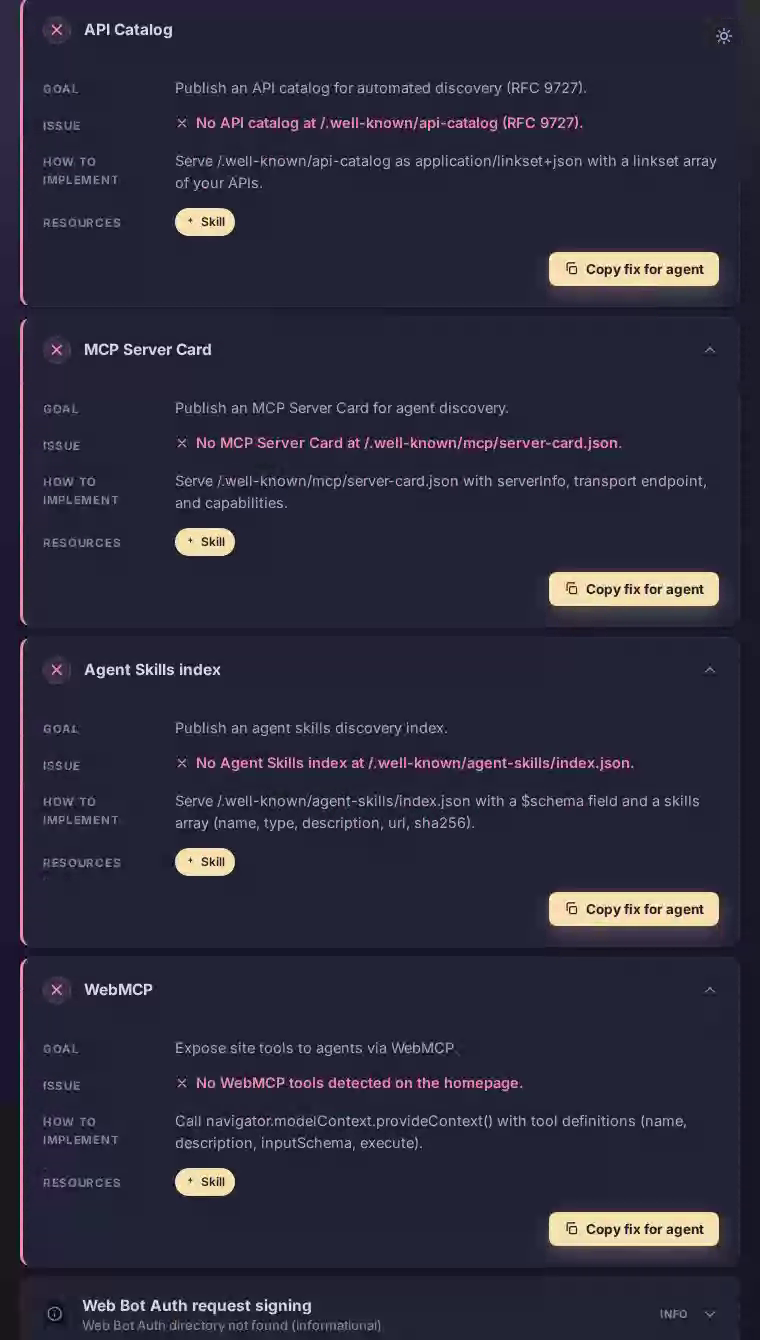
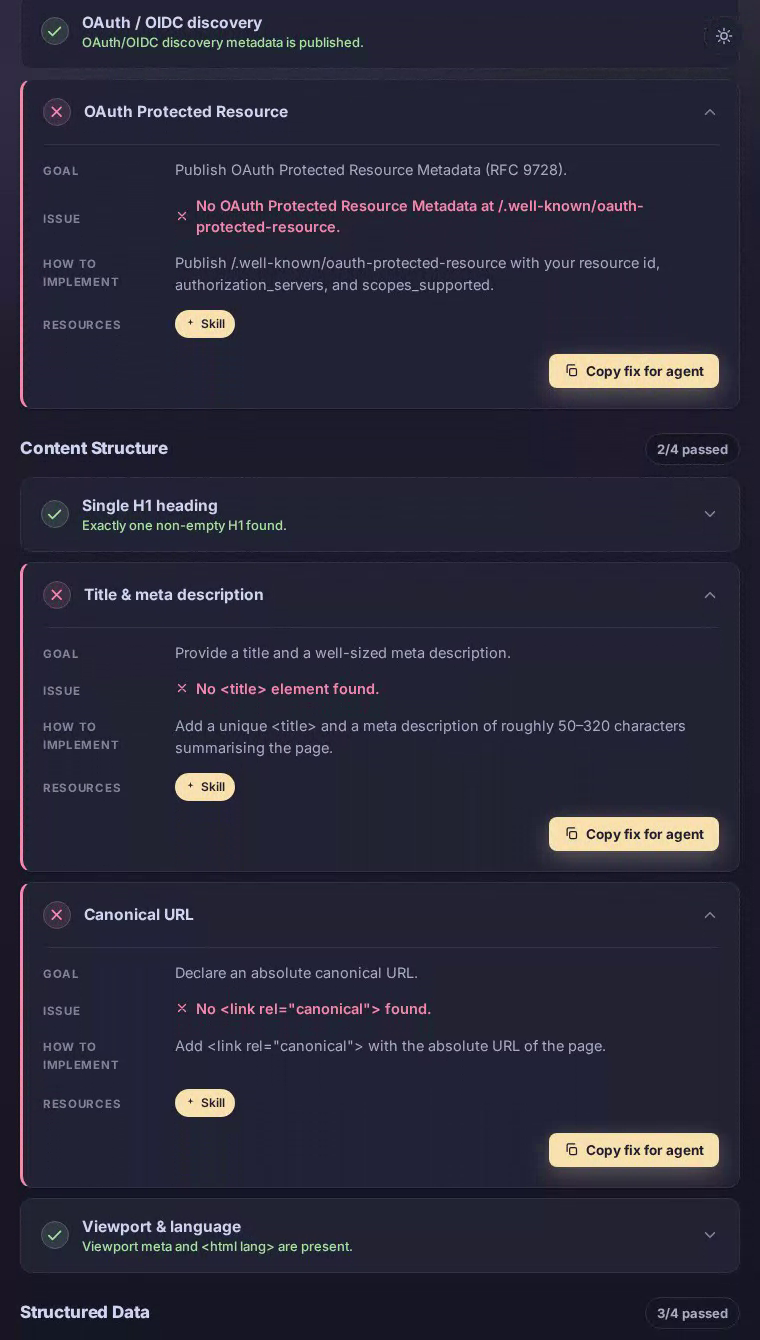
We scanned Figma and found an AEO score of 52 out of 100. Its structured data and agent discovery signals are solid, but agent interface support registers zero — AI assistants can parse Figma's metadata but cannot programmatically invoke or negotiate with its services in any standardized way.
What AI sees
An AI agent arriving at Figma's homepage finds a well-branded design platform with good surface metadata but no machine-callable interfaces waiting beneath it.
Figma presents itself coherently as a collaborative design tool: title tags, Open Graph metadata, and structured data are all in order, earning strong scores in both discovery and structured data categories. Agents can confirm the site's purpose, brand, and general content with confidence. Past that surface layer, however, the machine hits a wall. There is no Markdown variant of page content, no RFC 8288 Link headers directing agents to useful resources, no MCP server card, and no agent skills index. For a platform whose entire value proposition revolves around programmatic design workflows, APIs, and plugin ecosystems, the complete absence of agent-facing interfaces is a meaningful blind spot — one that will compound as AI-driven design tooling continues to accelerate.
Where it loses points
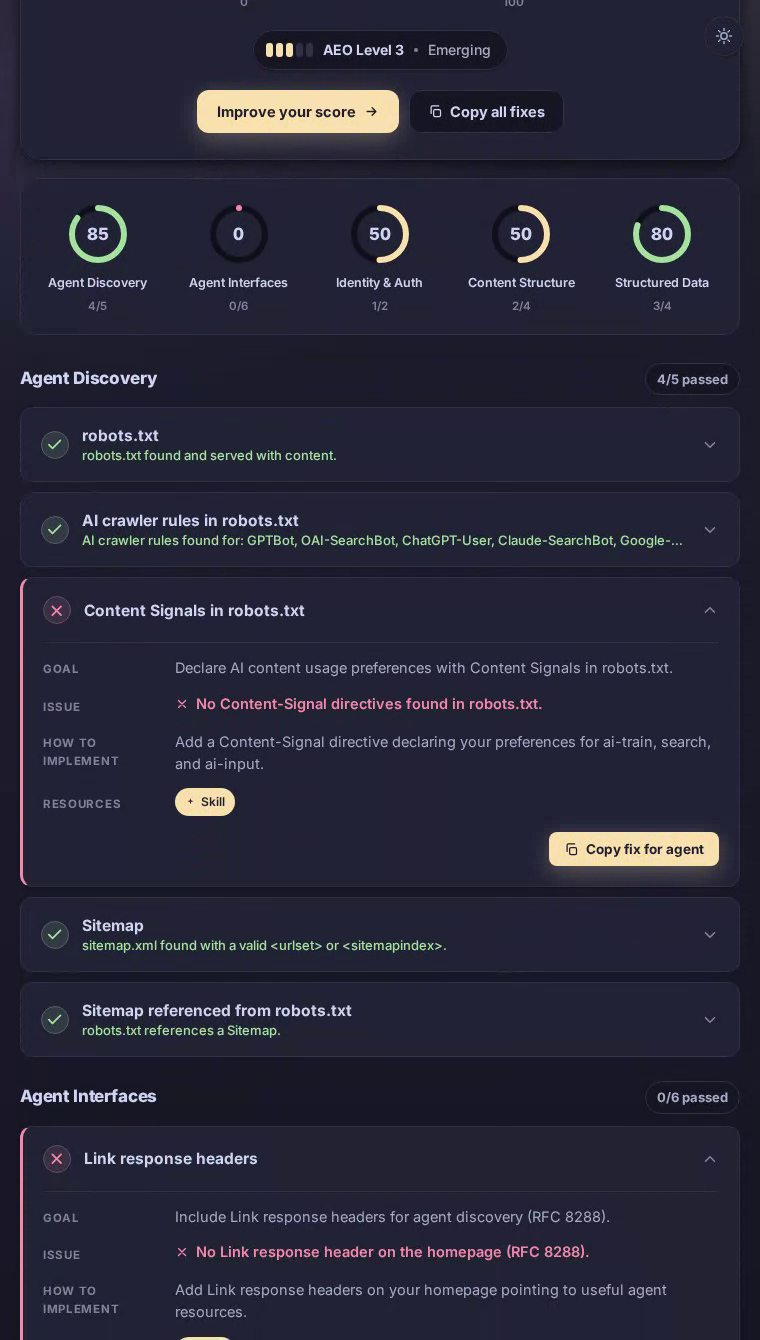
Agent interfaces is the single category collapsing Figma's overall score — every check in that dimension returned a failure.
How to fix it
Three targeted additions would deliver the sharpest AI readiness lift for a platform operating at Figma's scale and technical depth.
Publish an MCP Server Card
Expose Figma's capabilities to AI orchestration platforms through a standardized server card at /.well-known/mcp/server-card.json.
The scan found no MCP Server Card at /.well-known/mcp/server-card.json, leaving every agent-native tool blind to Figma's transport endpoints and declared capabilities.
Serve a JSON document at /.well-known/mcp/server-card.json with serverInfo (name, version), a transport endpoint pointing to Figma's MCP-compatible API surface, and a capabilities block. This single file turns Figma into a first-class citizen for AI orchestration platforms that auto-discover and invoke design operations on behalf of users.
Return Markdown for Agent Requests
Deliver a text/markdown version of homepage and documentation content when an AI agent signals it prefers Markdown via the Accept header.
Figma returns only HTML regardless of Accept: text/markdown requests, forcing agents to parse design-heavy markup to surface actionable information.
Add server-side content negotiation so requests carrying Accept: text/markdown receive a clean Markdown response with Content-Type: text/markdown, while HTML remains the default for browsers. For Figma specifically, this means stripping canvas embeds and surfacing feature descriptions, pricing, and API documentation in a format agents can directly quote and reason over without visual noise.
Publish an API Catalog
Surface Figma's REST, Webhooks, and Plugin APIs through a machine-readable catalog at /.well-known/api-catalog per RFC 9727.
No API catalog was detected at /.well-known/api-catalog, so automated agents cannot discover Figma's API surface without prior out-of-band knowledge.
Serve /.well-known/api-catalog as application/linkset+json listing each API with rel and type fields. AI agents and integration platforms will then auto-discover the full surface, directly reducing the friction for developers building AI-assisted design workflows on top of Figma's ecosystem.
Common questions
Why does Figma score 52 out of 100 when its structured data and agent discovery look healthy?
What does an MCP Server Card actually unlock for a design platform at Figma's scale?
Who benefits most from Figma adding Markdown content negotiation?
Is your own site ready for AI?
Run the same five-category analysis on any URL. Free, no account needed to start.
Check your own website free