How AI reads Shopify
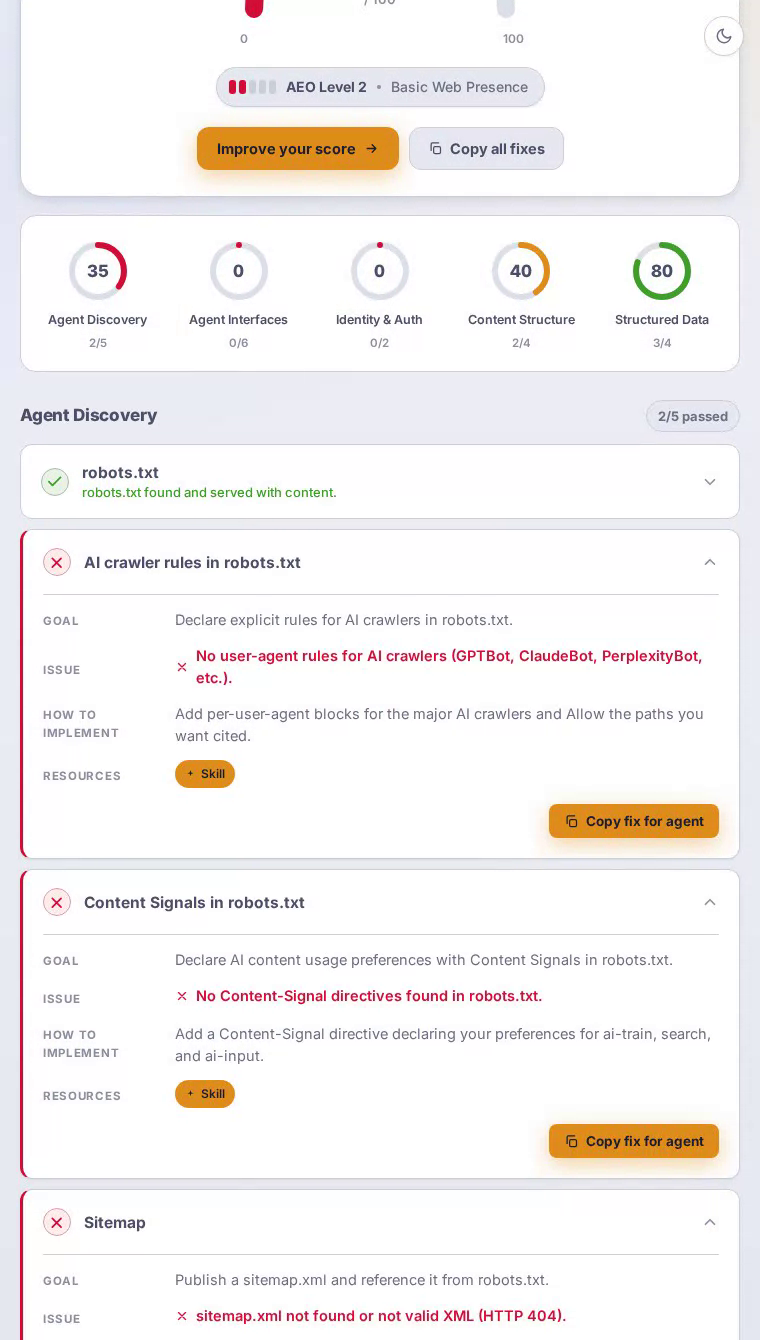
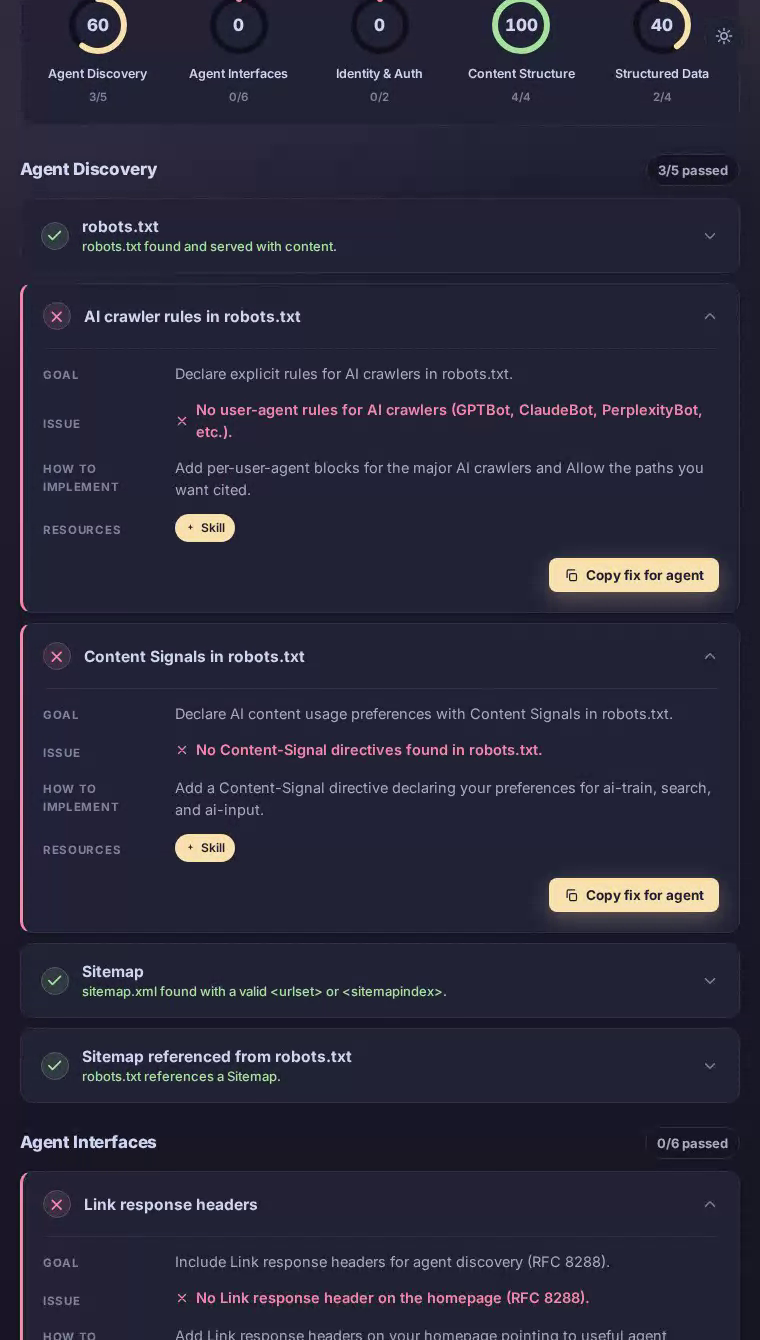
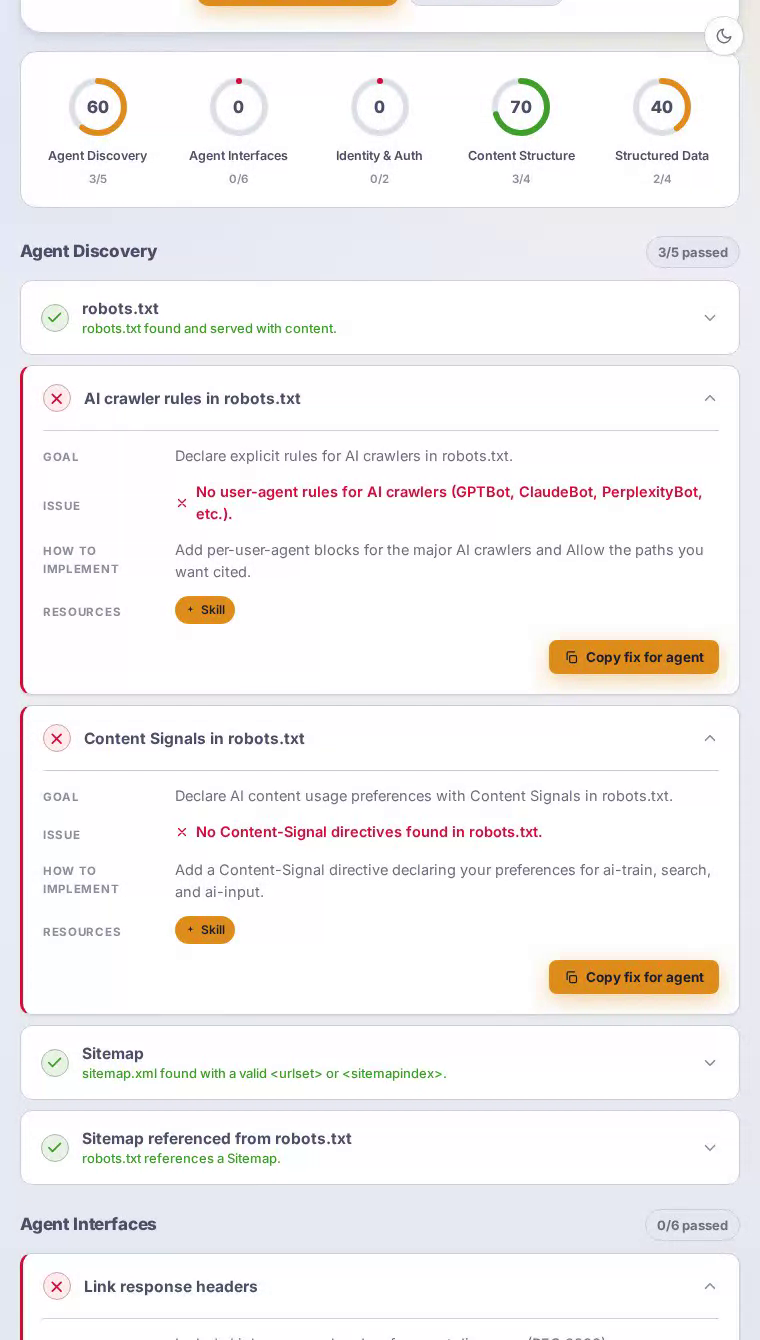
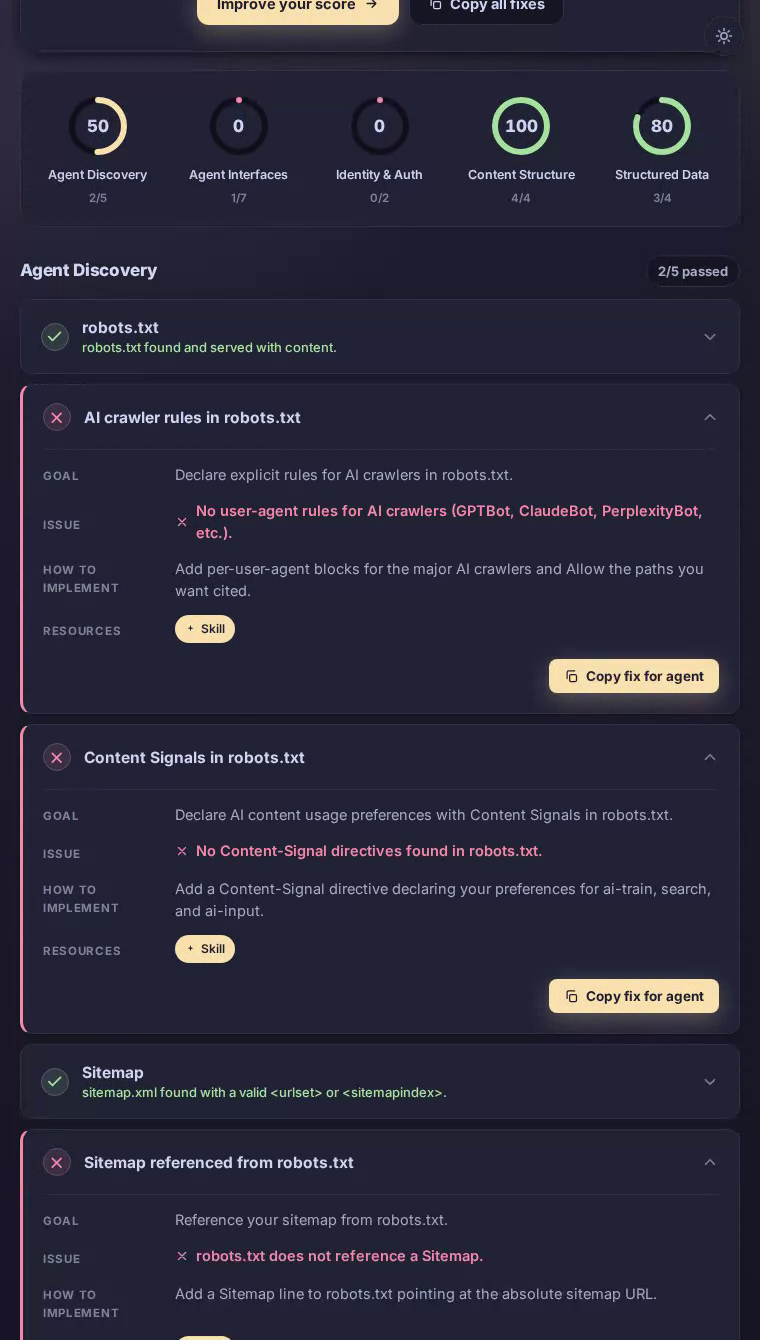
We scanned Shopify and found a 50/100 AEO score at level 3. Content structure is perfect (100/100) and structured data is strong (80/100), but agent discovery and authentication interfaces both score zero — leaving AI crawlers without explicit guidance and blocking agentic integrations that could serve Shopify's developer-heavy audience.
What AI sees
When an AI agent visits Shopify's homepage today, it encounters well-structured e-commerce content with rich schema markup but almost no active agent guidance.
Shopify's homepage delivers dense, well-organized content about its e-commerce platform — product descriptions, merchant testimonials, and feature breakdowns that AI language models can parse with confidence. The structured data layer scores 80/100, ensuring schema markup communicates pricing tiers and business identity in machine-readable form. Content structure scores a perfect 100, meaning headings, paragraphs, and semantic HTML are clean and consistent. However, no Link response headers direct agents to API docs or discovery endpoints. The robots.txt carries no AI-specific crawler rules, so GPTBot and ClaudeBot receive identical treatment to generic web crawlers — a significant gap for a platform that actively courts developers and tech-forward merchants.
Where it loses points
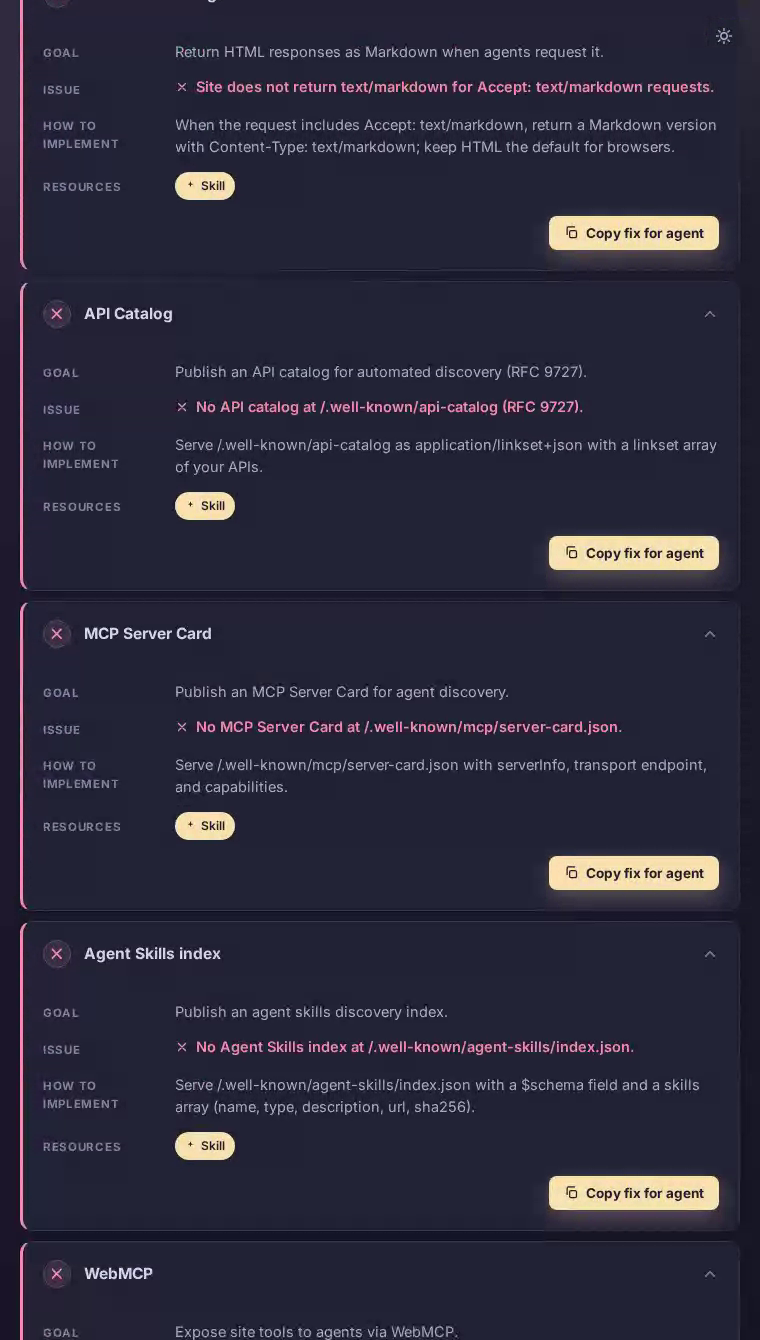
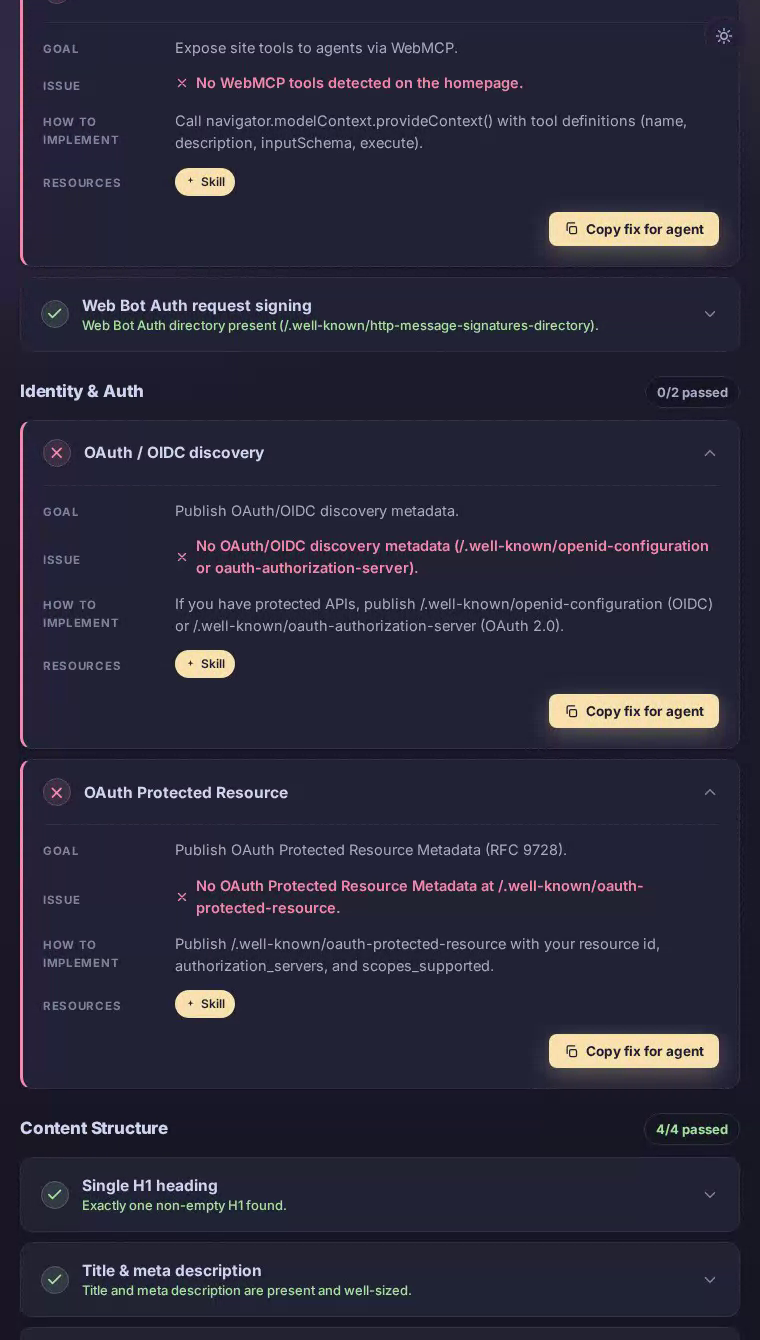
Agent interfaces and identity authentication both score zero — the categories that determine whether AI tools can programmatically discover and interact with Shopify at all.
How to fix it
Three targeted changes would move Shopify's AEO score meaningfully higher and open the platform to the rapidly expanding ecosystem of AI-powered commerce agents.
Add AI Crawler Rules to robots.txt
Declare explicit user-agent rules for GPTBot, ClaudeBot, and PerplexityBot so AI indexing behavior is intentional rather than accidental.
The scan found no user-agent entries for any major AI crawler in Shopify's robots.txt.
Add individual User-agent blocks for GPTBot, ClaudeBot, PerplexityBot, and similar bots with Allow directives covering merchant docs, feature pages, and pricing content Shopify wants cited in AI-generated answers. This single change transforms passive crawling into a deliberate citation strategy.
Publish an MCP Server Card
Serve a machine-readable server card at /.well-known/mcp/server-card.json so AI agents can discover Shopify's transport endpoint and declared capabilities.
No MCP Server Card was found at the expected well-known path.
Create /.well-known/mcp/server-card.json with serverInfo, a transport endpoint, and a capabilities object. For a developer-focused commerce platform, this is a high-signal trust indicator that unlocks agentic integrations for the growing class of AI shopping and merchant automation tools.
Serve an RFC 9727 API Catalog
Publish a standards-compliant API catalog so agents and developer tools can auto-discover Shopify's APIs without parsing documentation pages.
No API catalog was found at /.well-known/api-catalog.
Serve /.well-known/api-catalog as application/linkset+json with entries referencing the Admin API, Storefront API, and Partner API. Shopify's extensive developer ecosystem makes this one of the highest-leverage AEO improvements available — it converts implicit API availability into explicit, machine-discoverable infrastructure.
Common questions
What does Shopify's AEO score of 50 out of 100 mean?
Can AI agents interact with Shopify programmatically today?
Is Shopify's website content well-indexed by AI answer engines?
Is your own site ready for AI?
Run the same five-category analysis on any URL. Free, no account needed to start.
Check your own website free