How AI reads Sweetgreen
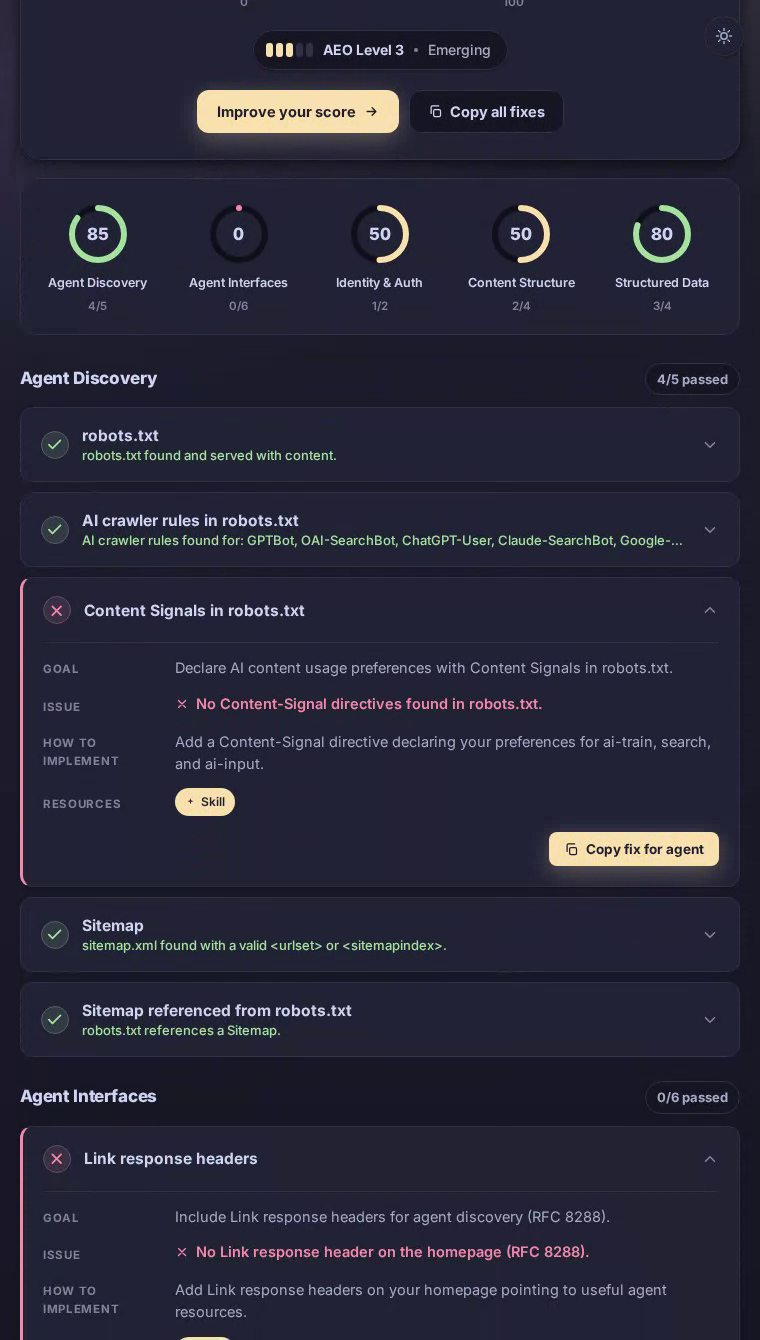
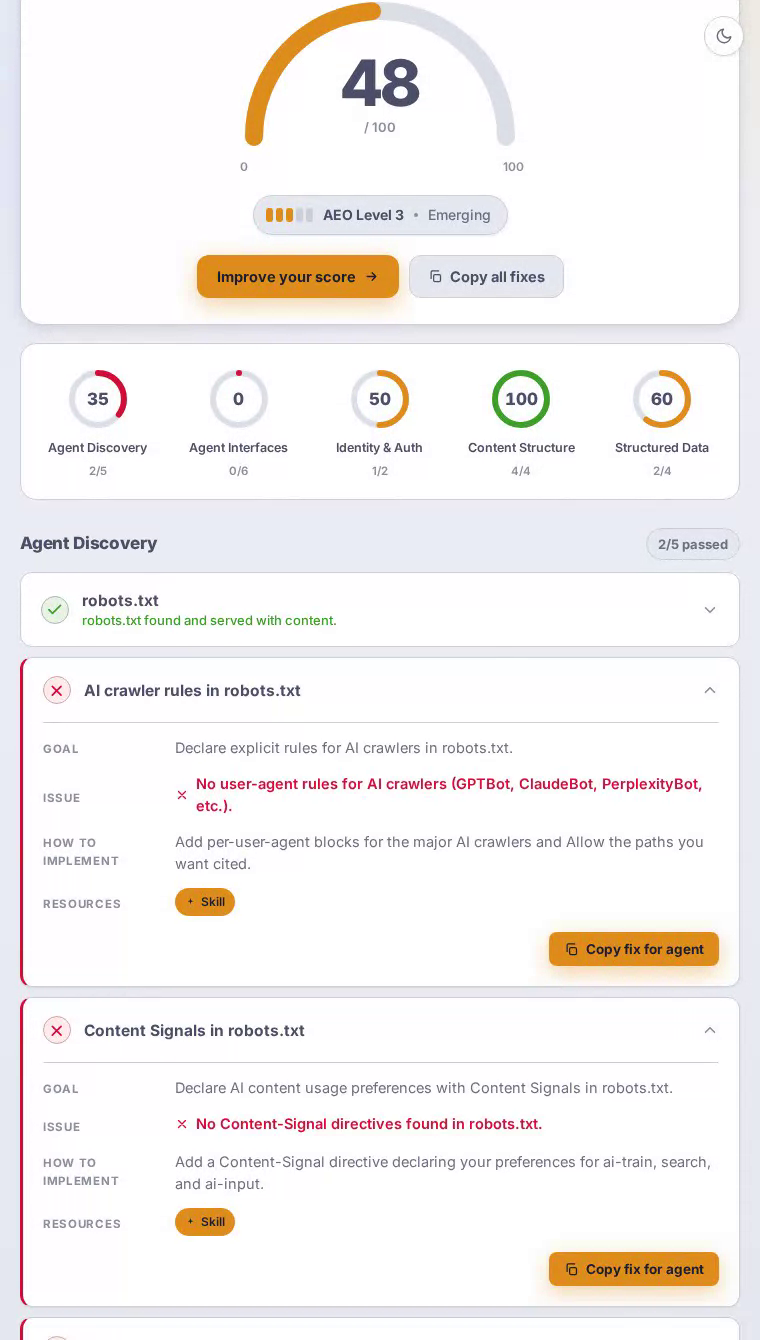
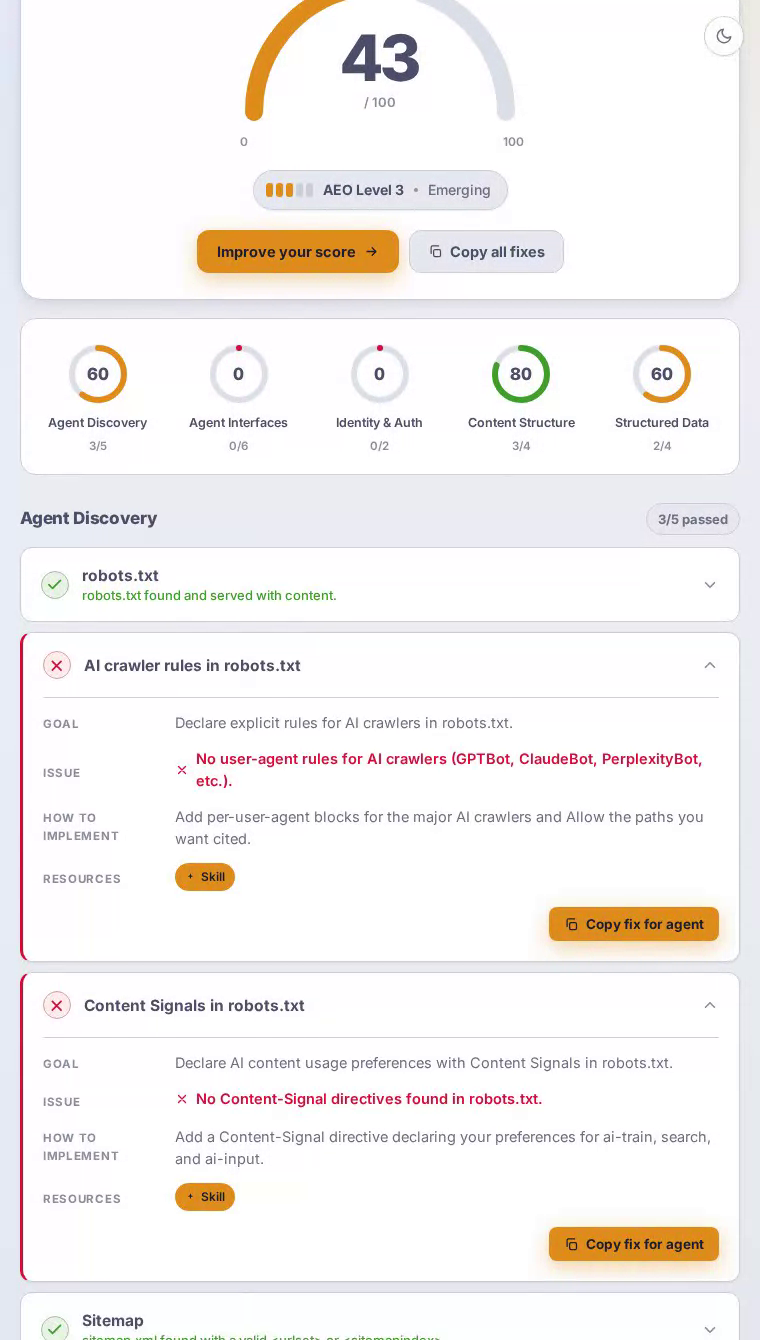
Sweetgreen scores 43 out of 100 on our AEO scan, landing at level 3. The farm-to-table salad chain has solid content structure but leaves AI agents without crawl permissions, machine-readable interfaces, or an identity layer — meaning answer engines can surface menu items but struggle to act on or attribute them.
What AI sees
When an AI agent hits Sweetgreen's homepage today, here is the signal it actually collects.
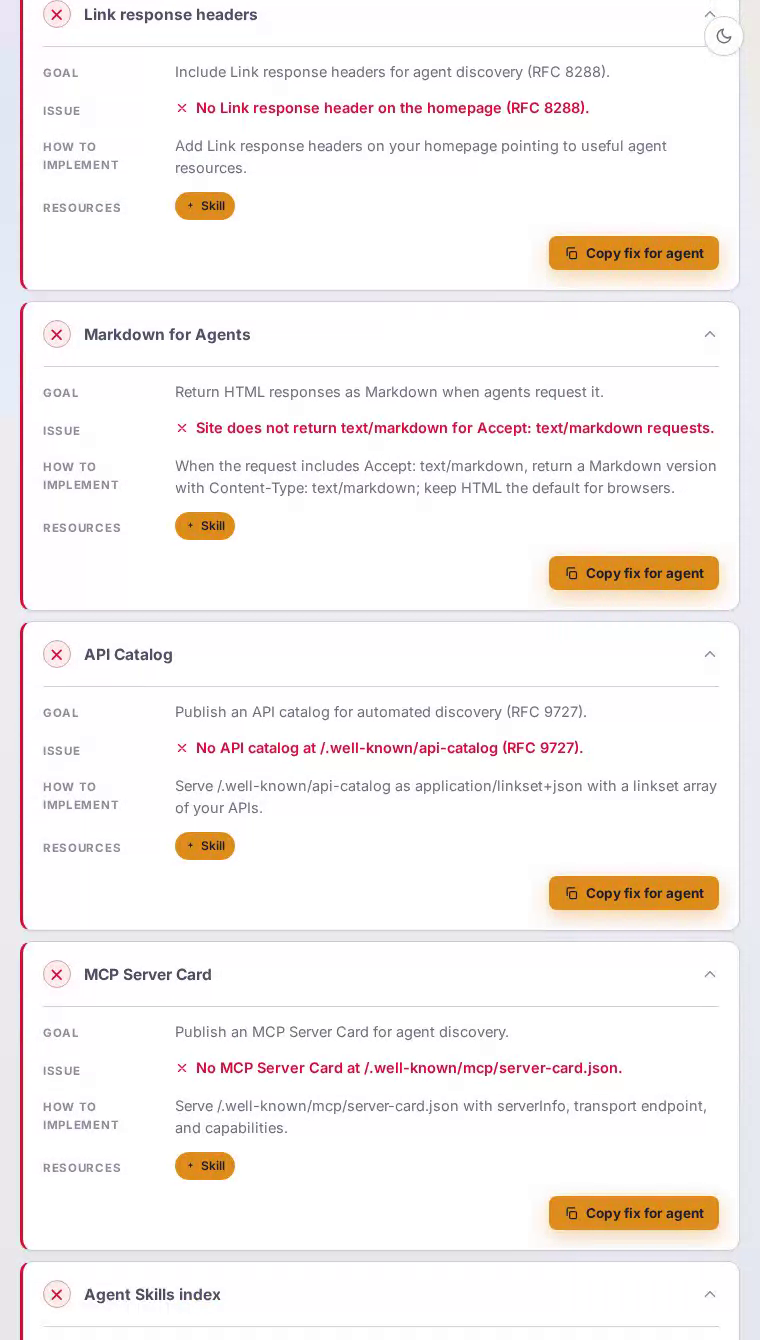
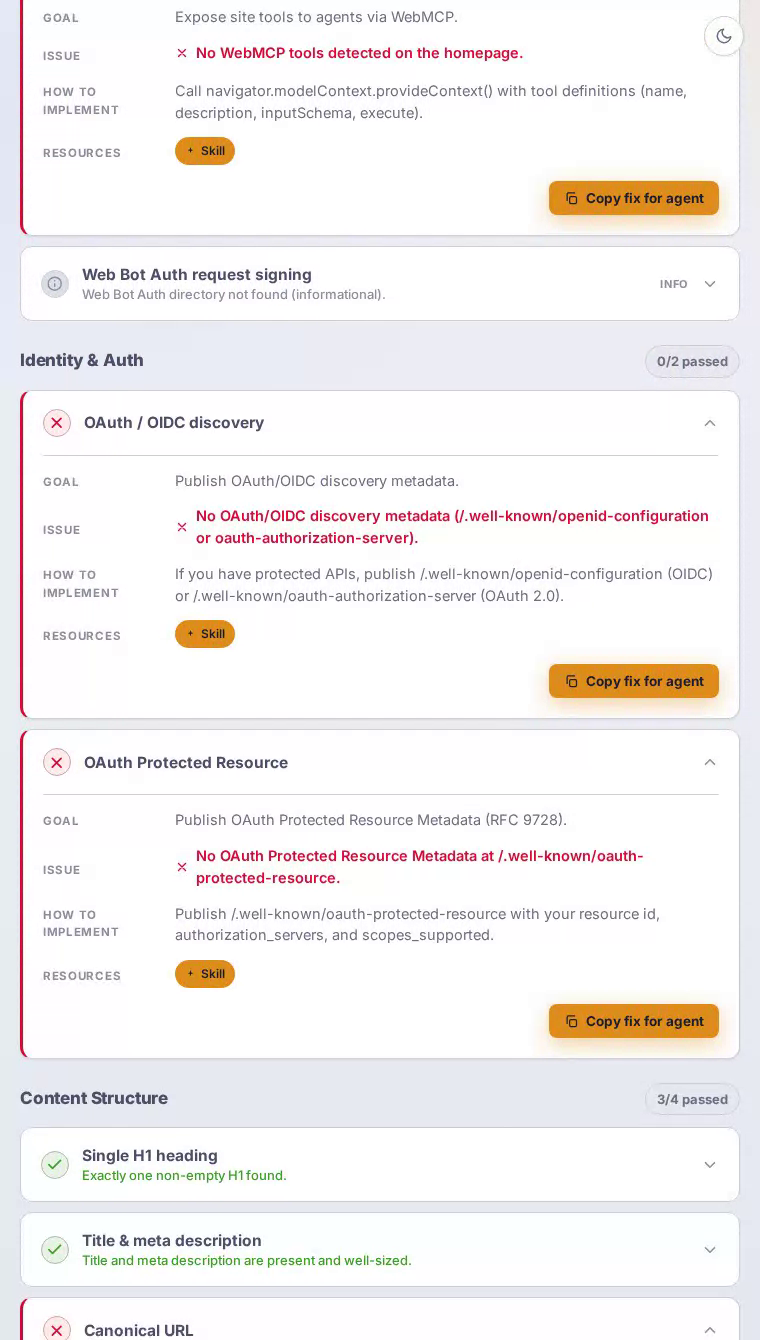
Structured data and clean semantic HTML give agents a reasonable grip on menu categories and restaurant locations — content_structure scores 80 out of 100. Agent discovery sits at a mid-range 60, meaning crawlers find some breadcrumbs but no explicit permission grants. What agents cannot do is confirm who controls the site, access a machine-readable API surface, or request a Markdown-formatted summary of the page. The homepage returns only HTML regardless of the Accept header sent, and no Link response headers point agents toward programmatic resources. For a brand selling customizable bowls to nutrition-minded consumers who increasingly discover restaurants through AI-powered queries, that gap translates directly into missed citations.
Where it loses points
Agent interfaces and identity authentication both score zero — the sharpest drag on Sweetgreen's overall 43-point result.
How to fix it
Three targeted changes address the most critical gaps the scan uncovered and would move the score fastest.
AI Crawler Rules in robots.txt
Declare explicit per-agent rules so GPTBot, ClaudeBot, PerplexityBot, and peers know exactly which paths they may index and cite.
The scan found no user-agent blocks for any major AI crawler in Sweetgreen's robots.txt, leaving their behavior entirely undefined.
Add named user-agent sections for GPTBot, ClaudeBot, and PerplexityBot. Under each, Allow the menu, locations, and nutrition pages you want cited, and Disallow checkout or account paths. This single file edit can unlock consistent AI citation across ChatGPT and Perplexity overnight.
MCP Server Card
Publish a machine-readable server card at /.well-known/mcp/server-card.json so autonomous agents can discover Sweetgreen's capabilities without guessing.
No MCP Server Card exists at the standard well-known path, directly contributing to the agent_interfaces category scoring zero.
Create /.well-known/mcp/server-card.json with a serverInfo object (name, version, description), a transport endpoint, and a capabilities block. For Sweetgreen this could expose menu-lookup and store-locator tools, making the brand directly actionable inside AI assistants rather than merely citable.
Markdown-on-Demand Responses
Return a clean Markdown version of pages when agents send Accept: text/markdown, giving AI parsers a compact, citation-ready format.
The site returns only HTML regardless of the Accept header, forcing every AI crawler to parse full browser-targeted markup.
Intercept requests carrying Accept: text/markdown at the CDN or application layer and respond with Content-Type: text/markdown. For menu and nutrition pages, a stripped Markdown response with ingredient lists and calorie counts is precisely what voice assistants and AI answer engines quote back to health-conscious users.
Common questions
Why does Sweetgreen score 43 out of 100 on AEO?
Does missing AI crawler rules in robots.txt hurt Sweetgreen in AI search results?
What would an MCP Server Card do for Sweetgreen's AI visibility?
Is your own site ready for AI?
Run the same five-category analysis on any URL. Free, no account needed to start.
Check your own website free